iee, event networking platform (software) designed to enhance engagement and connections at events. AI-powered matchmaking to connect attendees who share common interests.

iee, event networking platform (software) designed to enhance engagement and connections at events. AI-powered matchmaking to connect attendees who share common interests.

Contribution

Discovery, UX, UI,

prototyping, mobile design, design system

Role

Lead Product Designer

Industry

Event tech

Years

2025 – now

Key achievement

Served as the design lead on a major project, delivering an intuitive platform in the EventTech space focused on reducing wasted time during events. The product enabled more efficient engagement for attendees while providing organizers with the tools needed to create and manage events effectively.

I led the design of a connected mobile application and SaaS platform from the ground up, creating a seamless and intuitive cross-platform experience.

Role

This was an internal initiative in the events market, focused on creating a new product from the ground up with a strong emphasis on design quality and overall experience.

I worked directly with leadership and the product team to define the product vision, identify key problems worth solving, and establish a clear design direction early on. My responsibilities included researching the market, analyzing competitors and existing solutions, and translating these insights into a cohesive product experience.

From early discovery through design execution, I helped shape the foundations of the product, ensuring a thoughtful, user-centered experience that balanced usability, aesthetics, and business goals.

Challenge

We started the project from the ground up, with the primary challenge centered on defining the right product focus and business model for the events market.


While early ideas and market research existed, a key insight emerged: attendees often lose time and attention during events, making it difficult to stay engaged and connect with the right people. Our challenge was to design a mobile-first solution that helped users engage more meaningfully during events while reducing the friction of finding and connecting with relevant people.


From a design perspective, I took ownership of shaping the product from scratch, where clarity, trust, and strong information hierarchy were critical. These were the moments where users either built confidence in the product—or churned—making early experience and interaction design essential to the product’s success.

My approach

/Step 1 - Analyze market & existing solutions

I analyzed existing solutions in the events space, comparing their features, pricing, and key trade-offs. To structure these insights, I created a competitive comparison table outlining strengths, gaps, and opportunities.


Spoke with people actively using these products to understand their pain points and expectations. These insights informed a clear user journey for our solution, helping define where the experience needed to reduce friction, build trust, and drive engagement.

/Step 2 - Wireframe & Define

Together with the Product Manager, we identified the core features for both the mobile application and the desktop platform and defined a clear scope for the initial release.

I then created low-fidelity wireframes to align on structure and functionality with key stakeholders. These early explorations were used to validate assumptions, discuss trade-offs, and run lightweight usability checks within the team before moving into detailed design.

/Step 3 - High-Fidelity UI

Started with a mobile-first approach, designing high-fidelity screens for the mobile application before extending the experience to the desktop platform. A consistent design language was applied across both surfaces to ensure clarity, cohesion, and a seamless cross-platform experience.

/Step 4 - Prototype & Feedback

I assembled an interactive prototype and ran walkthroughs with stakeholders across product to validate flows, gather feedback, and align on the final experience before implementation.

/Step 5 - Developer`s handoff

Worked closely with the development team to ensure a smooth and efficient design handoff. Through regular alignment and walkthroughs, we clarified interactions, edge cases, and implementation details, helping speed up the transition to development without compromising quality or design intent.

Understanding needs

Finding the right balance between user needs and business goals is inherently complex. It requires making informed bets, validating assumptions, and continuously iterating rather than relying on certainty.

Throughout the process, we focused on identifying this balance early, testing ideas quickly, and refining the product based on real feedback to ensure both user value and business viability.

A clear understanding of business goals is critical to shaping design solutions that drive impact while aligning with user expectations.

Solved problems (Mobile)

One of the key problems we addressed was the difficulty of discovering and connecting with the right people during events.


To solve this, we introduced an AI-powered, human-to-human matching experience inspired by familiar interaction patterns. Attendees could record a short video (up to 10 seconds) to introduce themselves, allowing others to quickly understand who they were and what they were looking for. Users could then swipe to express interest, creating a fast and intuitive discovery flow.


When a mutual match occurred, the product enabled users to seamlessly schedule a meeting within available event time slots. This reduced the friction of networking, helped attendees focus their attention on relevant connections, and made in-person meetings more intentional and efficient.

Another key problem we addressed was helping attendees stay organized and focused throughout an event.


To solve this, we introduced a personal agenda within the mobile application that centralized event sessions users planned to attend alongside meetings scheduled with other attendees. This allowed users to manage their time more effectively, avoid missing important sessions, and keep track of planned connections in one place.


By consolidating schedules and meetings into a single, clear view, the product reduced cognitive load and helped users navigate events with greater confidence and control.

Business events vary significantly in structure and complexity depending on the organizer, which made a one-size-fits-all mobile experience ineffective.


To address this, the main mobile screen was designed as a modular system built from configurable blocks. These blocks could be assembled and customized through the organizer portal on desktop, allowing each event to surface only the most relevant information and features for its audience.


This approach gave organizers flexibility while keeping the mobile experience clear, focused, and adaptable to different event formats without increasing complexity for attendees.

A key challenge at the start of the mobile experience was helping users navigate between multiple events without losing context or past connections.


To address this, we designed a global event hub that surfaced all events a user had been invited to, upcoming events they planned to attend, and events they had participated in previously. This ensured users could quickly enter the right event without friction.


To maintain continuity across events, we also preserved access to past conversations by keeping a global chat available from this hub. This prevented users from losing valuable connections and allowed ongoing communication beyond a single event.

Solved problems (Web)

One of the key challenges on the organizer side was defining a fair and scalable way to account for usage as events grew.


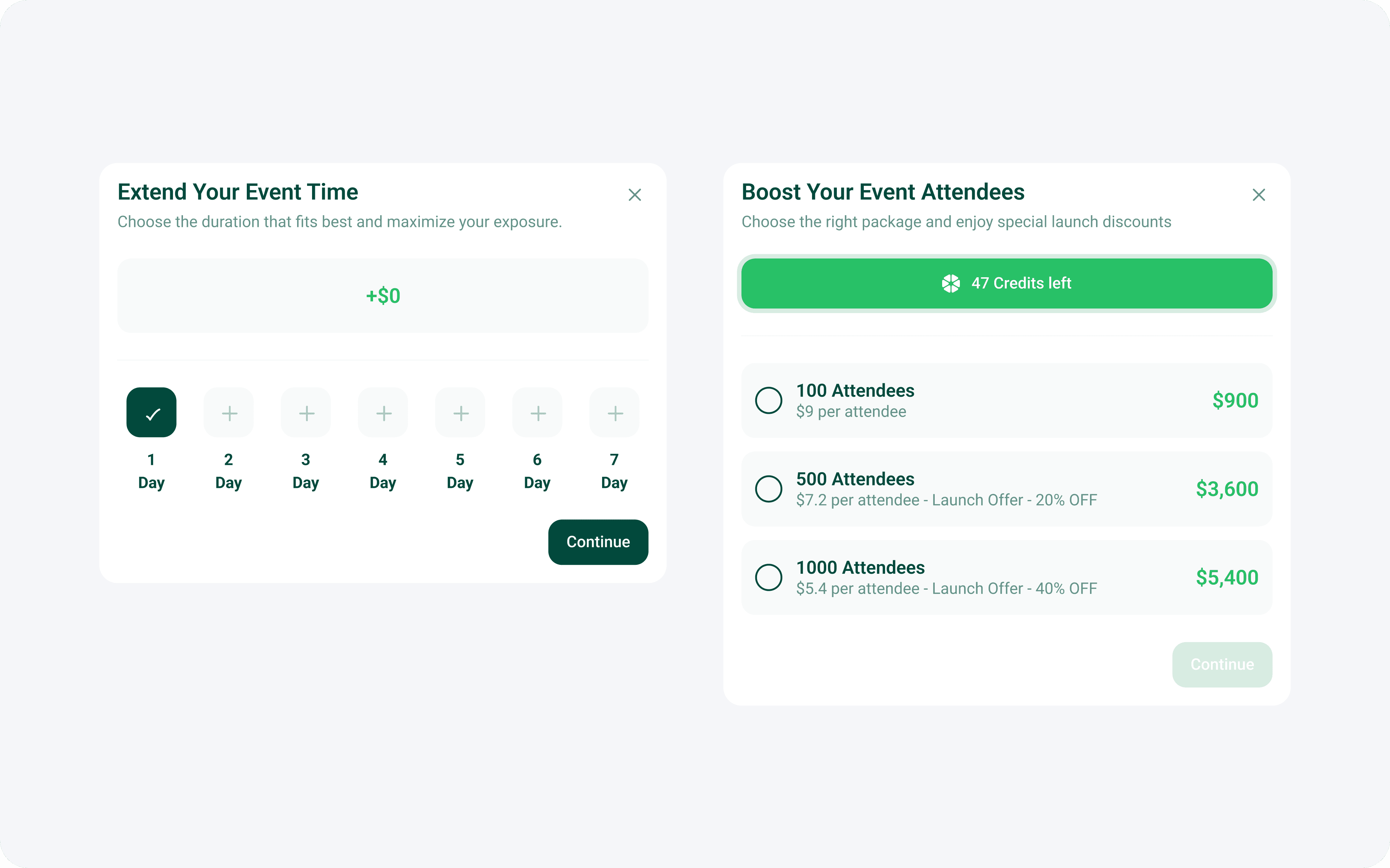
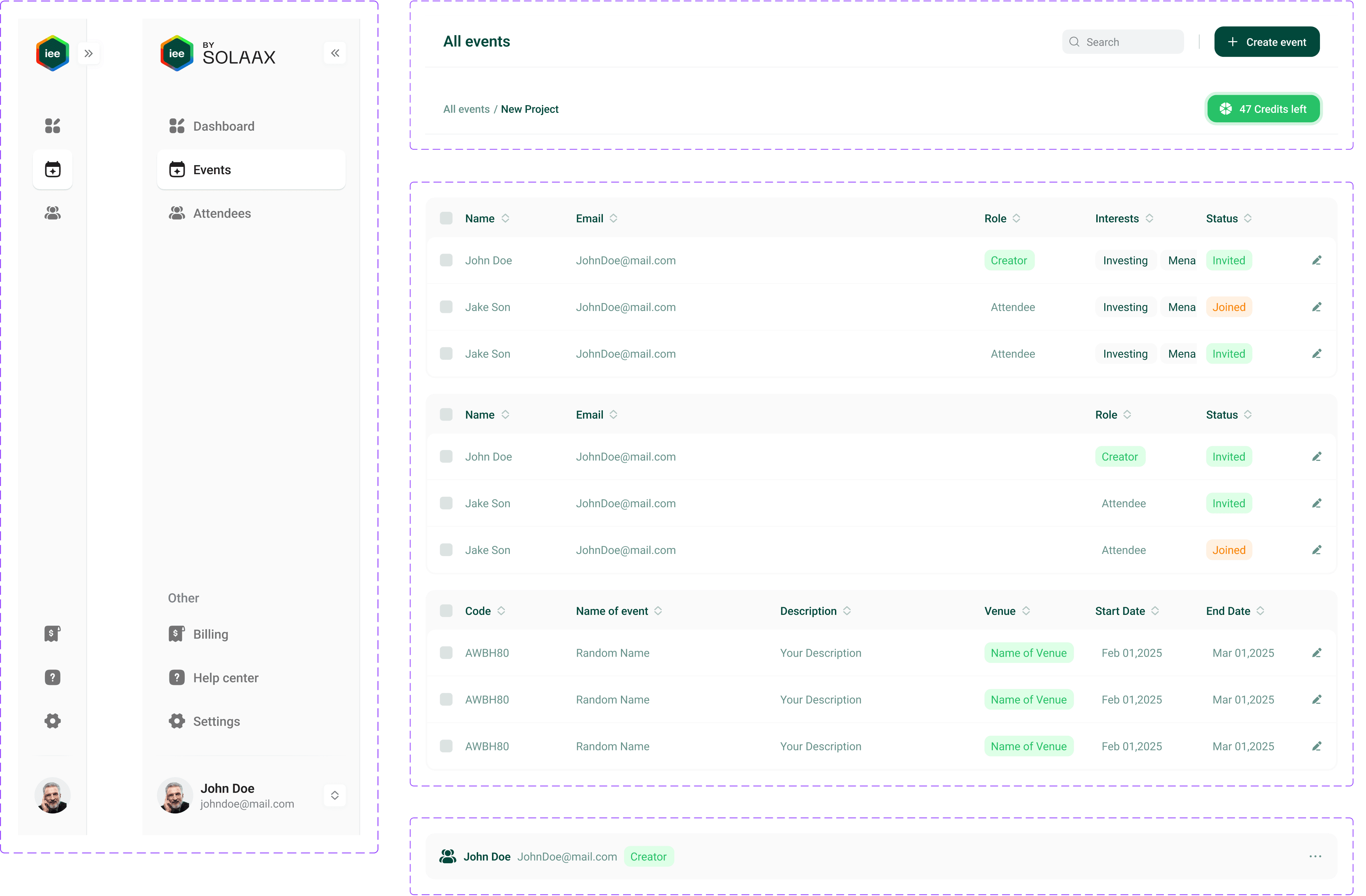
To address this, we designed a point-based system where the first 50 attendees of any event could be invited for free. As organizers added additional participants beyond this threshold, points were gradually deducted based on usage.


This approach lowered the barrier to entry for new organizers, encouraged early adoption, and provided a transparent, scalable model that aligned product usage with business value.

Another complex challenge was designing a web platform whose actions directly impacted the mobile experience.

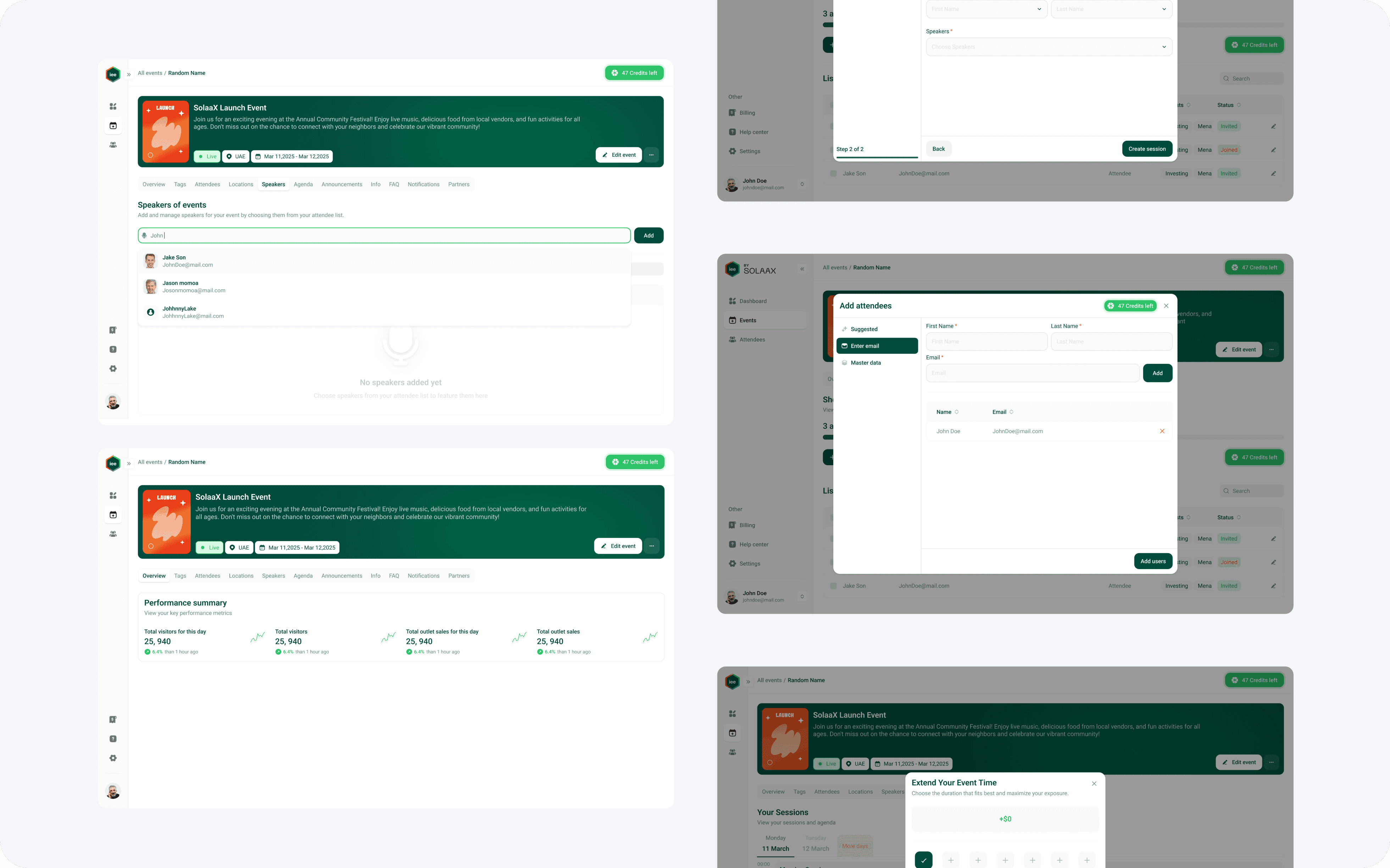
To address this, we carefully considered how every organizer action on desktop—such as configuring events, inviting attendees, or adjusting settings—would translate into the mobile application. The platform was designed to ensure changes were reflected clearly and consistently across both surfaces, reducing confusion and preventing mismatches between organizer intent and attendee experience.

This approach helped maintain alignment between the web and mobile products while supporting a cohesive, connected ecosystem.

Deliverables

Mobile

The mobile experience was designed across more than 78 screens, covering multiple user journeys and key component states. This ensured the product could support different event formats, user scenarios, and interaction flows while maintaining consistency and clarity throughout the experience.

App store screens

Designed a set of App Store–ready screens, crafted to clearly communicate the product’s value, key features, and overall experience for the marketplace.

Web platfrom

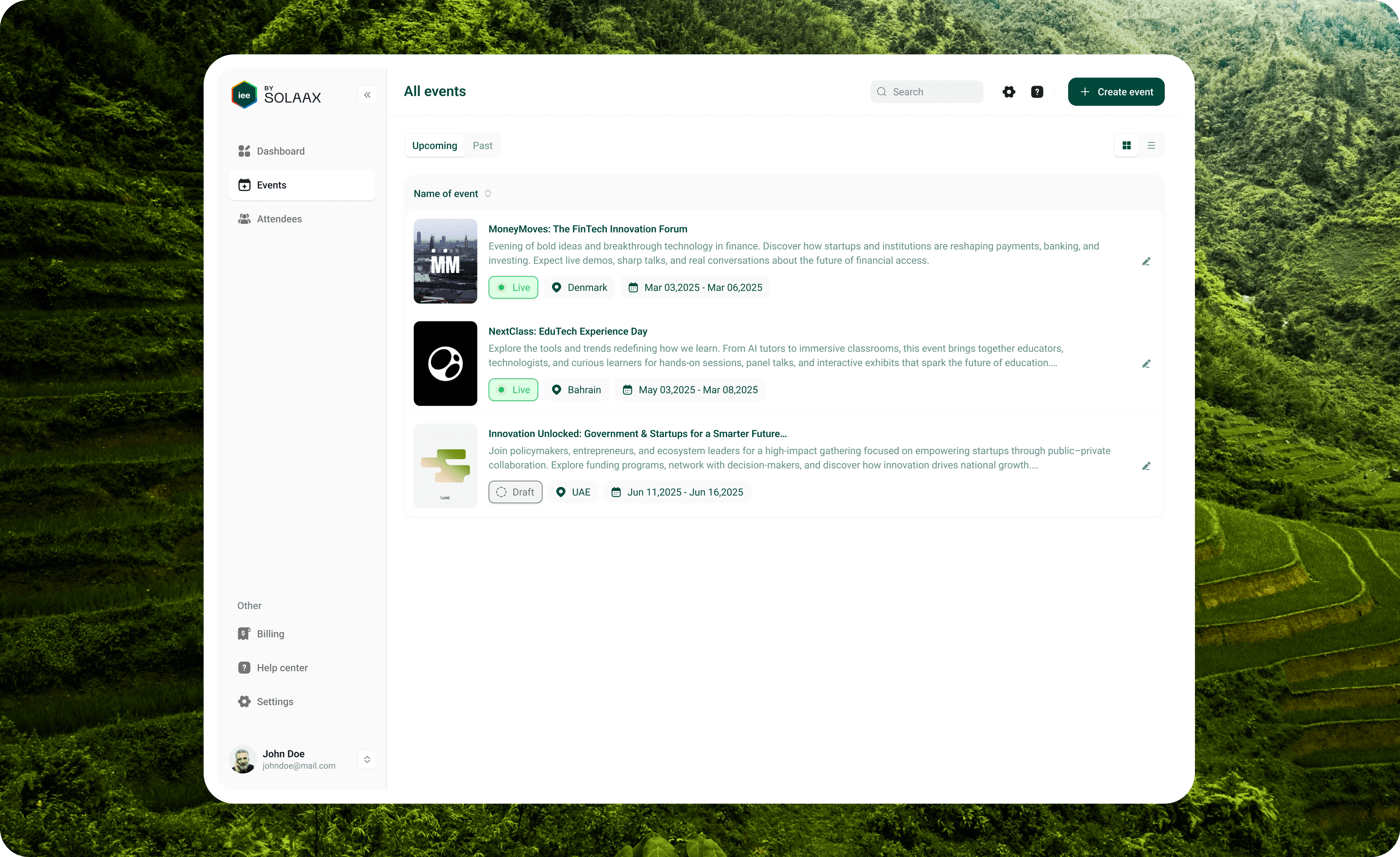
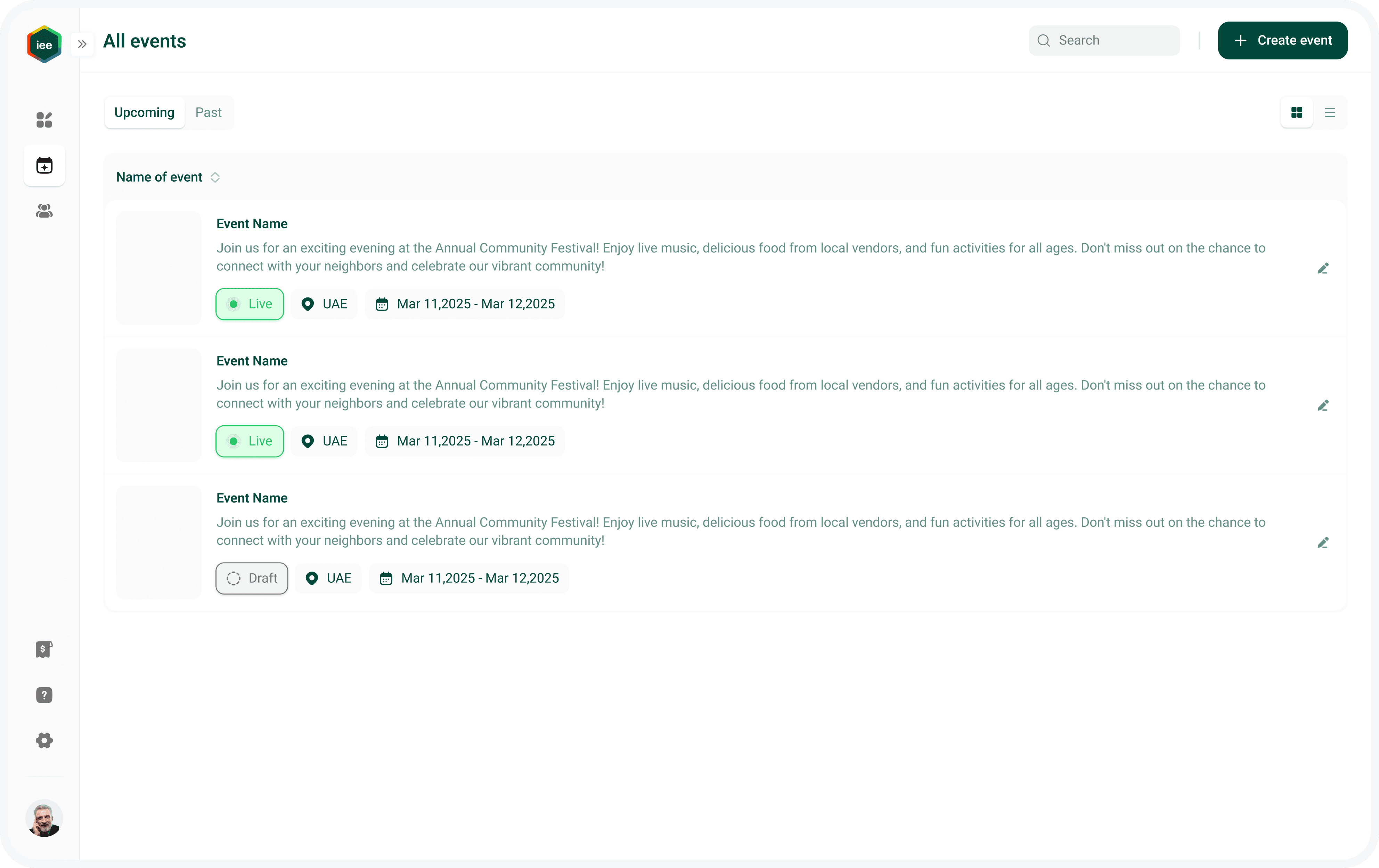
The mobile application was only meaningful if organizers could easily create and manage events, making the web platform a critical part of the ecosystem.


The web experience was designed to support organizers in setting up events, inviting attendees, and configuring event structures in a clear and well-organized way. This ensured that actions taken on the platform translated seamlessly into the mobile experience for attendees.

Email templates

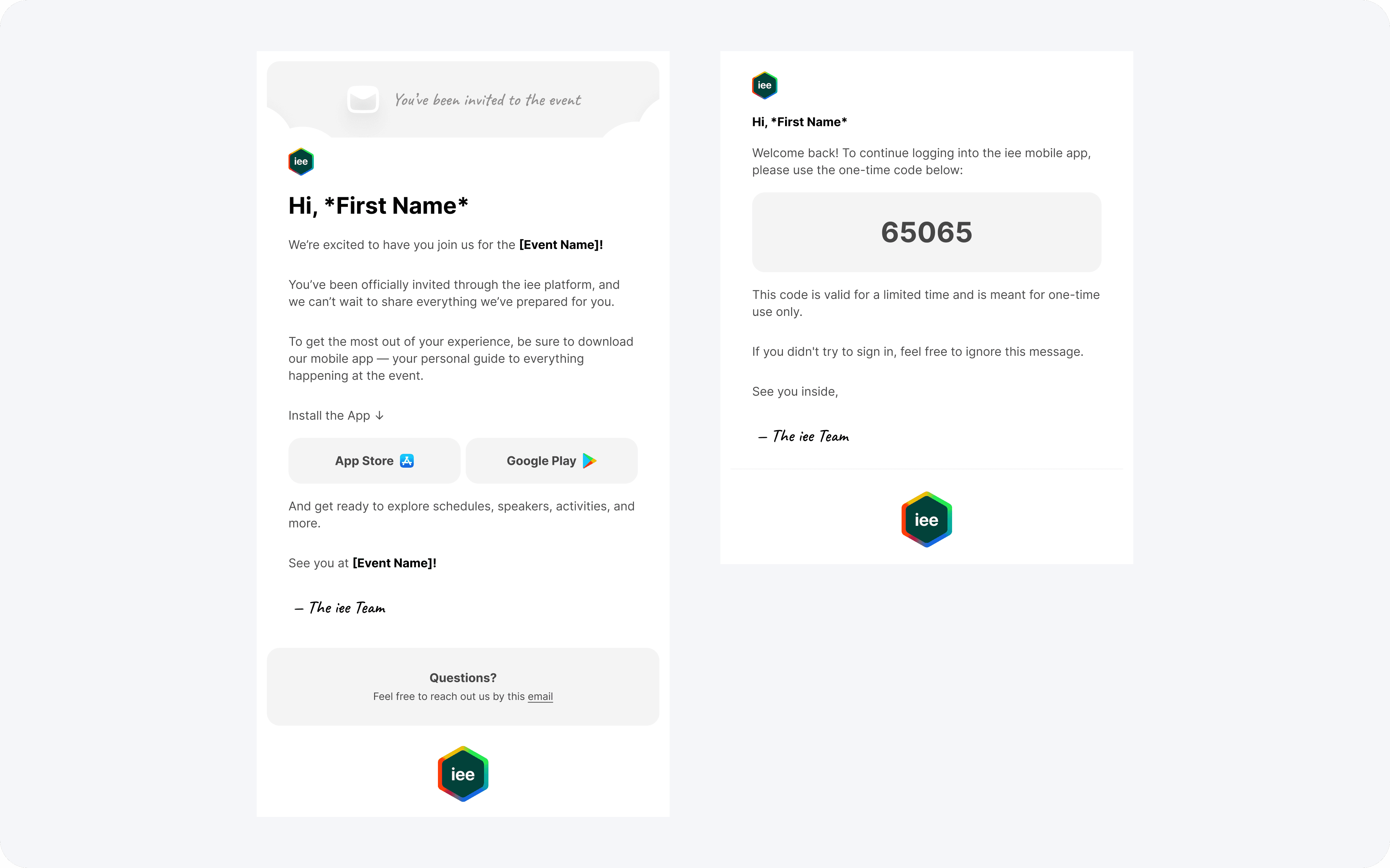
Designed an email invitation template for attendees, ensuring clear communication, consistent branding, and a smooth transition from invitation to event onboarding.

Outcomes

Initial feedback from the first testing group of 100 users, along with key stakeholders, was largely positive, confirming the overall product direction and core experience.


The feedback also highlighted opportunities for refinement, including minor UI adjustments and the addition of micro-interactions to further improve clarity and perceived quality. As the project remains under active development, we continue to enhance key areas and optimize the experience for different user groups based on ongoing feedback and validation.

Primary metrics

↑28%

Event engagement rate (early validation)

Early testing showed increased attendee engagement, driven by mobile-first discovery, personal agendas, and structured meeting flows that reduced time spent searching for relevant connections.

↑42%

Organizer activation

Organizers were able to create and configure events end-to-end using the web platform, with actions reflected immediately in the mobile experience, validating the connected ecosystem approach.

Secondary metrics

Event setup time

↓38%

Repeat engagement across events

↑22%

Churn rate

↓7%

Data sources

Early user testing (≈100 users), stakeholder reviews, usability walkthroughs, internal product feedback sessions.

©ALEX LISOVSKI