
Prepaire Labs is a pioneering healthcare technology company focused on revolutionizing drug discovery and precision medicine. The platform enables businesses and scientists to design, analyze, and discover personalized drugs using predictive models grounded in genetic, phenotypic, and clinical data.
Prepaire Labs is a pioneering healthcare technology company focused on revolutionizing drug discovery and precision medicine. The platform enables businesses and scientists to design, analyze, and discover personalized drugs using predictive models grounded in genetic, phenotypic, and clinical data.
Contribution
Discovery, UX, UI,
prototyping, design system, presentations
Discovery, UX, UI,
prototyping, design system, presentations
Role
Senior Product Designer
Senior Product Designer
Industry
Bio tech
Bio tech
URL
https://www.prepaire.com/
https://www.prepaire.com/
Years
2023-2025
2023-2025
Key achievement
Led the design of a complex biotech platform, translating advanced scientific workflows into scalable, usable products across multiple applications.
Role
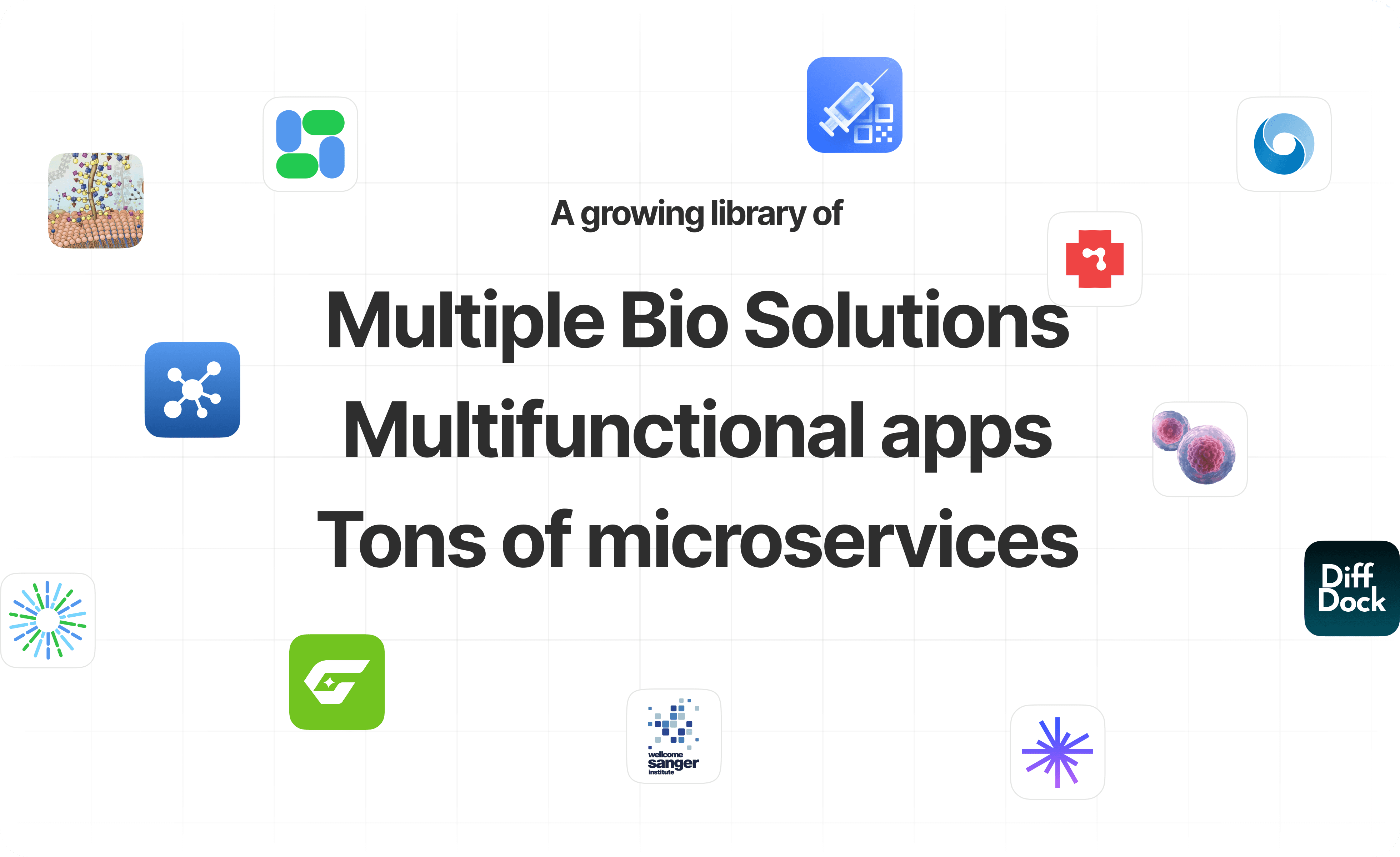
I worked as a product designer on a complex biotech platform in close collaboration with bioengineers and domain experts. My primary responsibility was designing the core platform and a set of initial applications available within its app marketplace.
Key goals included:
I worked as a product designer on a complex biotech platform in close collaboration with bioengineers and domain experts. My primary responsibility was designing the core platform and a set of initial applications available within its app marketplace.
Key goals included:
Creating a platform capable of connecting with multiple backend and laboratory tools
Creating a platform capable of connecting with multiple backend and laboratory tools
Ensuring a clear and intuitive experience for scientists navigating complex workflows
Ensuring a clear and intuitive experience for scientists navigating complex workflows
Designing an app store that allowed teams to discover existing tools as well as upload and manage their own applications.
Designing an app store that allowed teams to discover existing tools as well as upload and manage their own applications.
Effective collaborating with 5 Talented Designers on the team.
Effective collaborating with 5 Talented Designers on the team.
Challenge
When I joined the team, Prepaire Labs already had an internal application available within the platform. However, to move quickly, attract funding, and bring in scientists and businesses to use both the core platform and its applications, we faced several complex challenges.
First, the platform needed to translate highly complex biological and bioengineering concepts into clear, approachable experiences without oversimplifying the science. Second, we had to design a scalable platform that could support a growing ecosystem of third-party applications, encouraging external teams to build and publish their own tools.
At the same time, the product needed to communicate effectively with scientists using familiar terminology and workflows, while remaining accessible to new users. Internally, we also needed to establish clear development paths and design foundations to avoid rework and enable the team to move efficiently as the platform evolved.
When I joined the team, Prepaire Labs already had an internal application available within the platform. However, to move quickly, attract funding, and bring in scientists and businesses to use both the core platform and its applications, we faced several complex challenges.
First, the platform needed to translate highly complex biological and bioengineering concepts into clear, approachable experiences without oversimplifying the science. Second, we had to design a scalable platform that could support a growing ecosystem of third-party applications, encouraging external teams to build and publish their own tools.
At the same time, the product needed to communicate effectively with scientists using familiar terminology and workflows, while remaining accessible to new users. Internally, we also needed to establish clear development paths and design foundations to avoid rework and enable the team to move efficiently as the platform evolved.
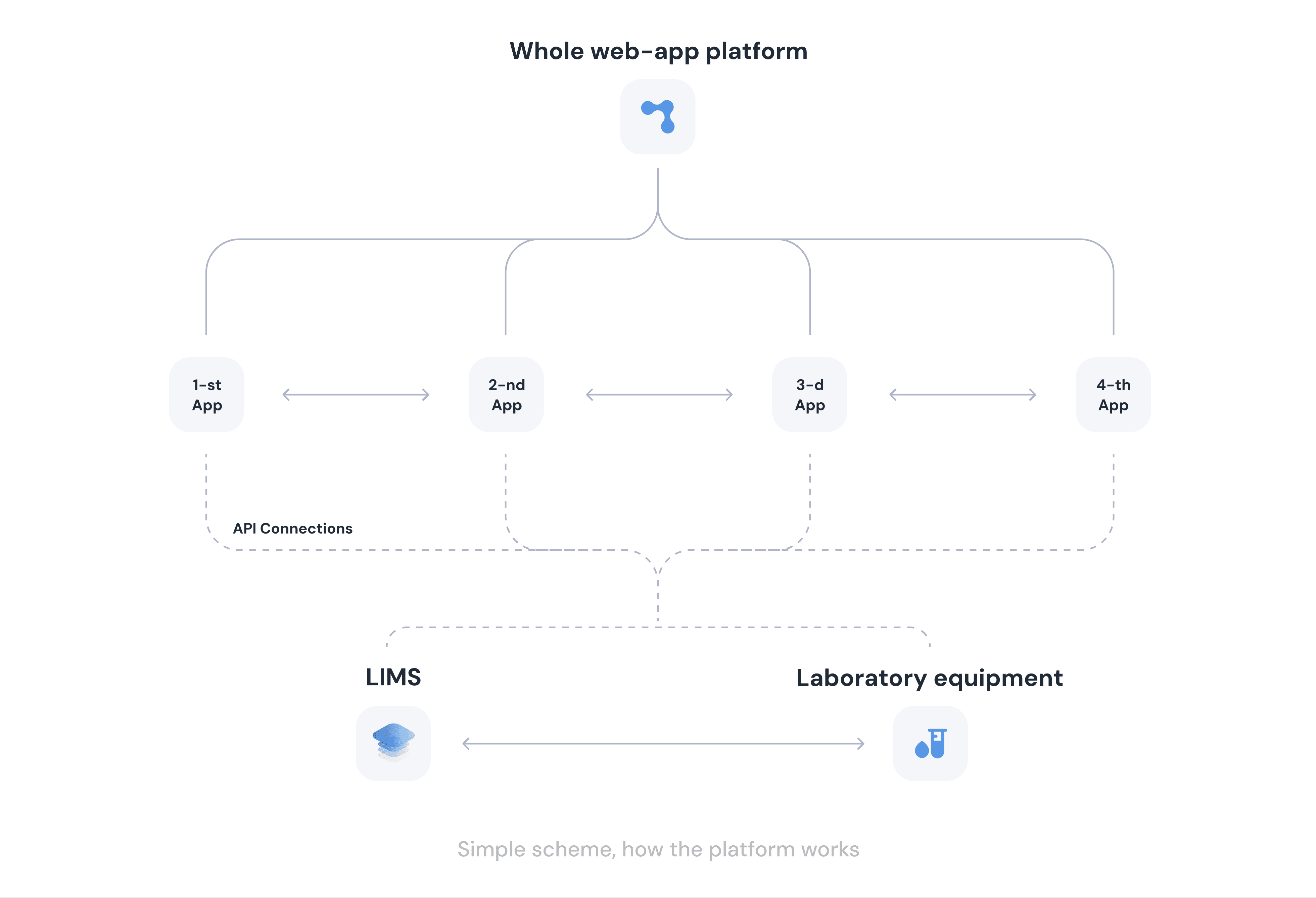
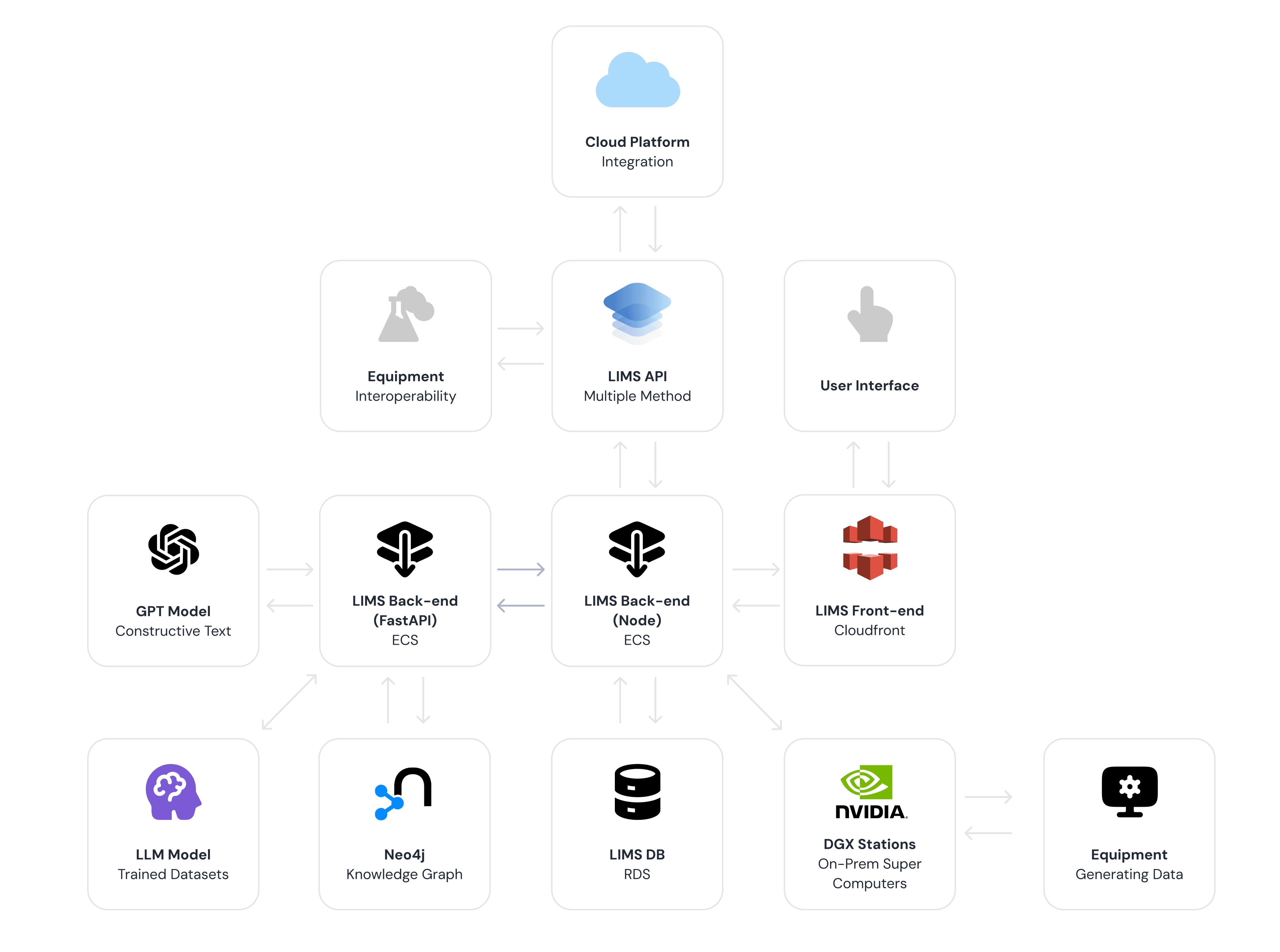
The LIMS architecture features a seamless user experience for robust functionality and efficient data management.
My approach
When selecting methods and tools to assess the product, my goal was to understand challenges from both user and business perspectives. Given the complexity of the domain, I intentionally narrowed my focus and addressed problems one at a time, prioritizing clarity and progress over breadth.
As a non-specialist in biotechnology, I approached each problem first from a user perspective, identifying where concepts, workflows, or terminology created friction. I then worked closely with bioengineers and domain experts to validate assumptions and translate scientific requirements into solutions that met both user needs and business objectives—without compromising the core idea of the product.
For each application on the platform, I followed a consistent process:
researching the subject matter, defining goals, criteria, and scope for the first iteration, shaping the UX through information architecture and user flows, and then moving into UI exploration, interaction design, and visual direction. Each cycle included user testing, developer handoff, and metric definition to support continuous validation and improvement.
When selecting methods and tools to assess the product, my goal was to understand challenges from both user and business perspectives. Given the complexity of the domain, I intentionally narrowed my focus and addressed problems one at a time, prioritizing clarity and progress over breadth.
As a non-specialist in biotechnology, I approached each problem first from a user perspective, identifying where concepts, workflows, or terminology created friction. I then worked closely with bioengineers and domain experts to validate assumptions and translate scientific requirements into solutions that met both user needs and business objectives—without compromising the core idea of the product.
For each application on the platform, I followed a consistent process:
researching the subject matter, defining goals, criteria, and scope for the first iteration, shaping the UX through information architecture and user flows, and then moving into UI exploration, interaction design, and visual direction. Each cycle included user testing, developer handoff, and metric definition to support continuous validation and improvement.

Each application followed the same structured approach, allowing us to iterate quickly while maintaining consistency across the platform.
By applying a repeatable design framework, we were able to validate ideas faster, align with domain experts more effectively, and ensure new tools integrated seamlessly into the broader ecosystem. This approach supported both rapid experimentation and long-term scalability of the platform.
Each application followed the same structured approach, allowing us to iterate quickly while maintaining consistency across the platform.
By applying a repeatable design framework, we were able to validate ideas faster, align with domain experts more effectively, and ensure new tools integrated seamlessly into the broader ecosystem. This approach supported both rapid experimentation and long-term scalability of the platform.
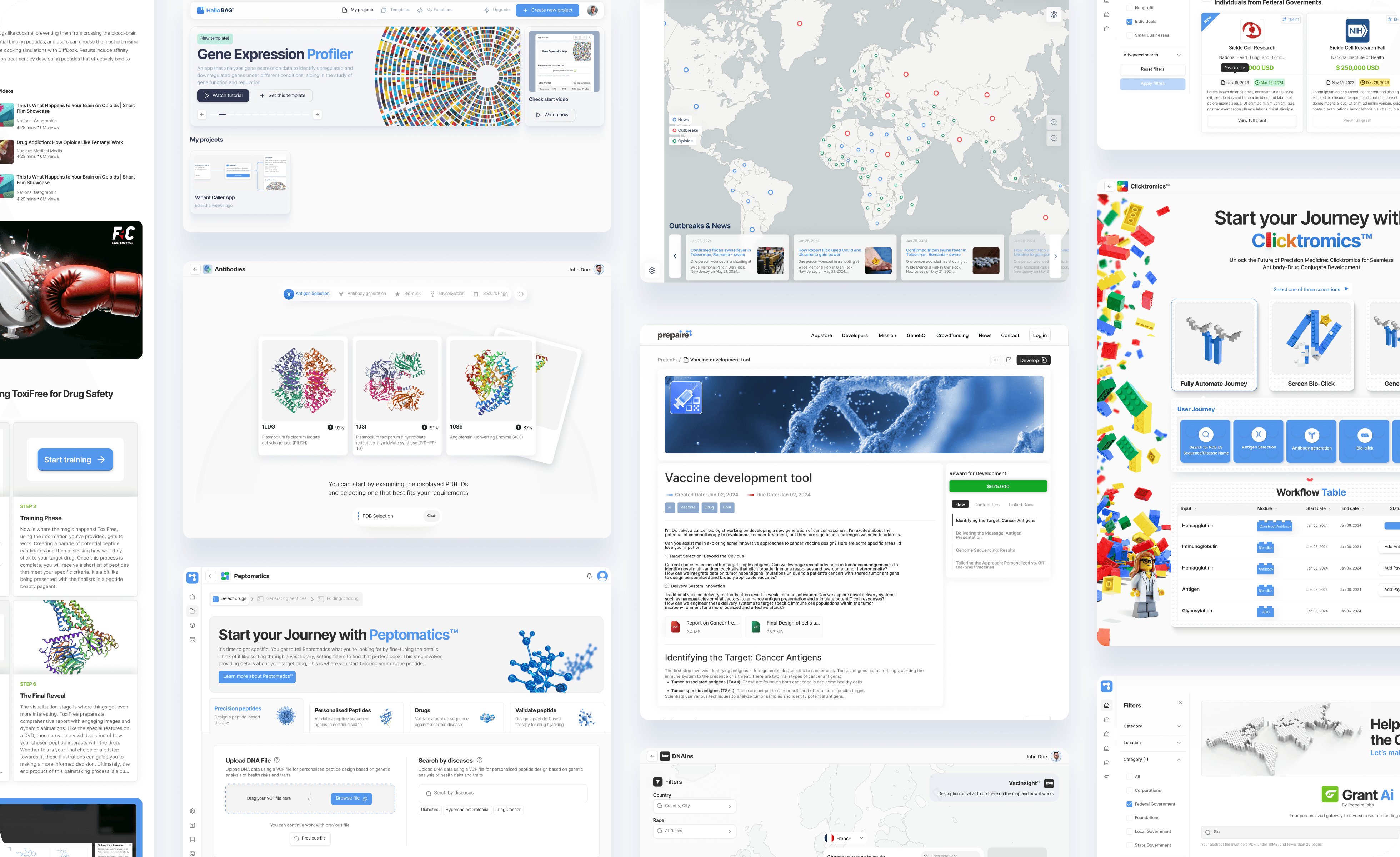
Grant AI
AI powered grant application assistant
AI powered grant application assistant
Peptomatics™
Discovering peptide-based treatments against opioid addiction
Discovering peptide-based treatments against opioid addiction

Clicktromics™
Efficient design and development of antibody-drug conjugates (ADCs)
Efficient design and development of antibody-drug conjugates (ADCs)

Hailo Dashboard
All the molecular tools you need to create novel therapeutics
All the molecular tools you need to create novel therapeutics


IPSC Tool
Platform for researchers to virtually conduct and analyze experiments involving IPSC stem cell lines and microfluidic devices
Platform for researchers to virtually conduct and analyze experiments involving IPSC stem cell lines and microfluidic devices

Bio Printing
Solution for creating complex 3D biological structures and advanced cellular models
Solution for creating complex 3D biological structures and advanced cellular models

Genome Sequencing
Offers complete DNA analysis from sample to data interpretation
Offers complete DNA analysis from sample to data interpretation

Drug Testing Tool
Comprehensive drug testing app that utilizes advanced sequencing to detect long-term drug use
Comprehensive drug testing app that utilizes advanced sequencing to detect long-term drug use
Prepaire Shield
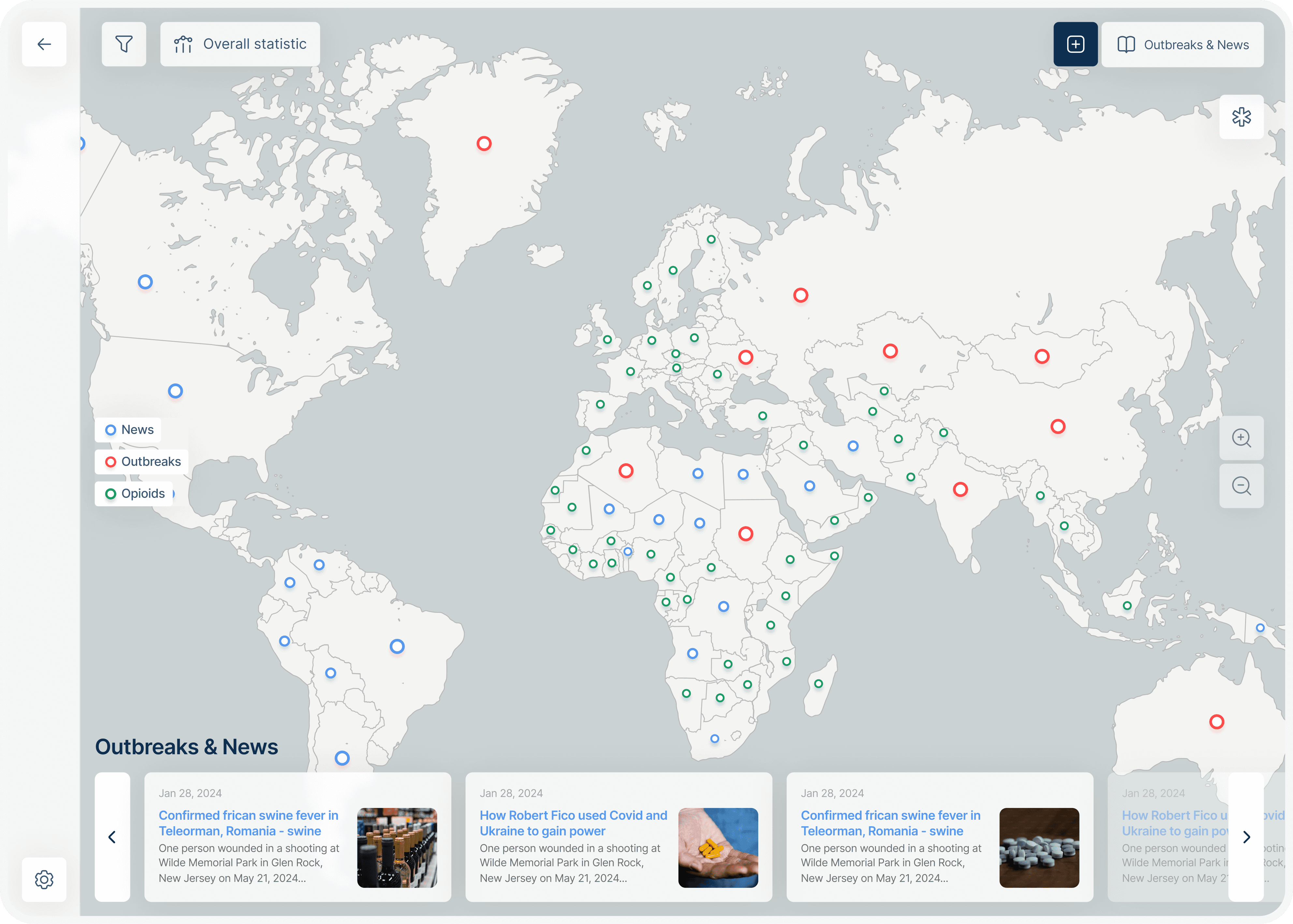
Pathogen Map is designed to be the premier interactive mapping platform for global pathogen data visualization
Pathogen Map is designed to be the premier interactive mapping platform for global pathogen data visualization
Application (Prepaire Shield)
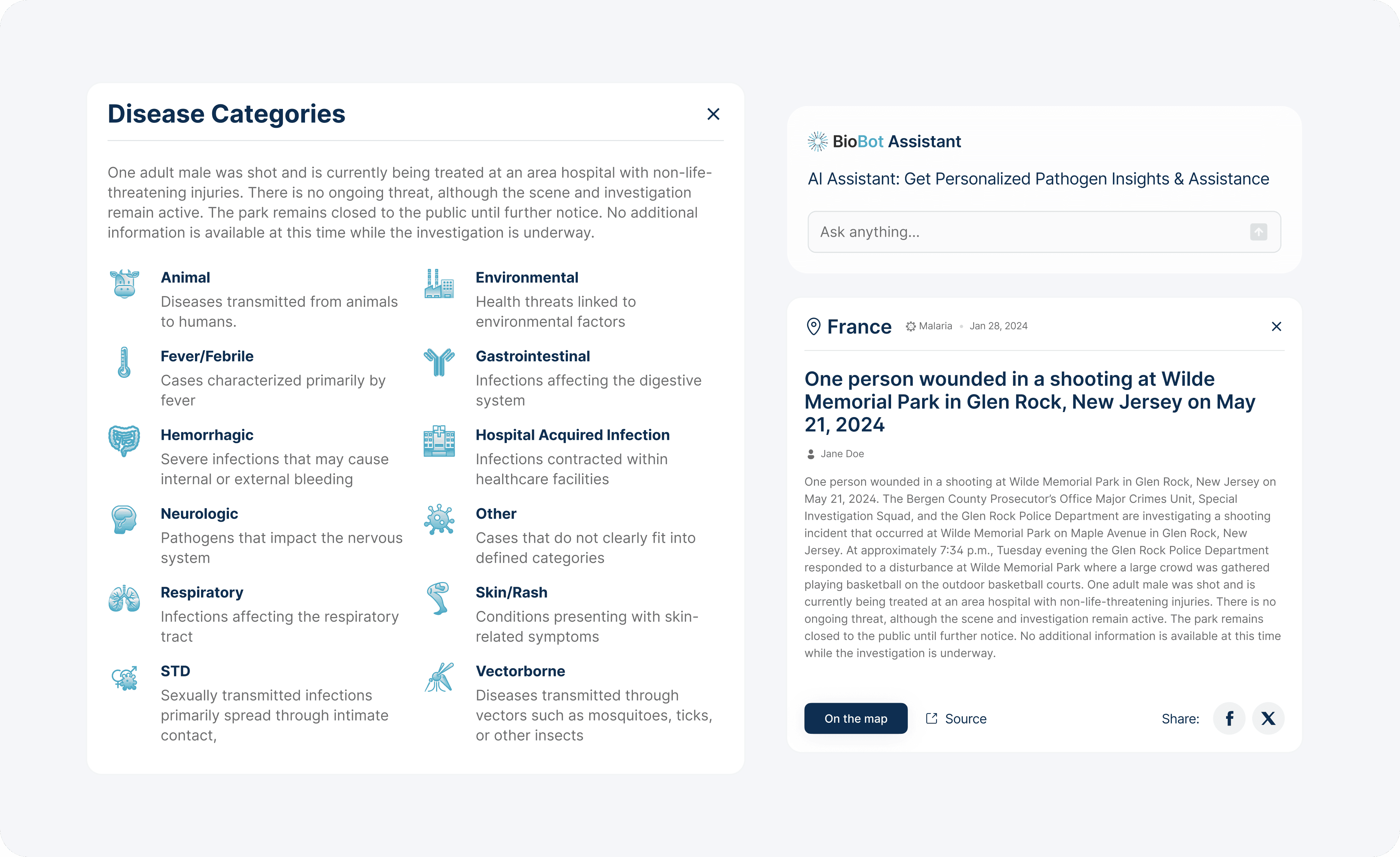
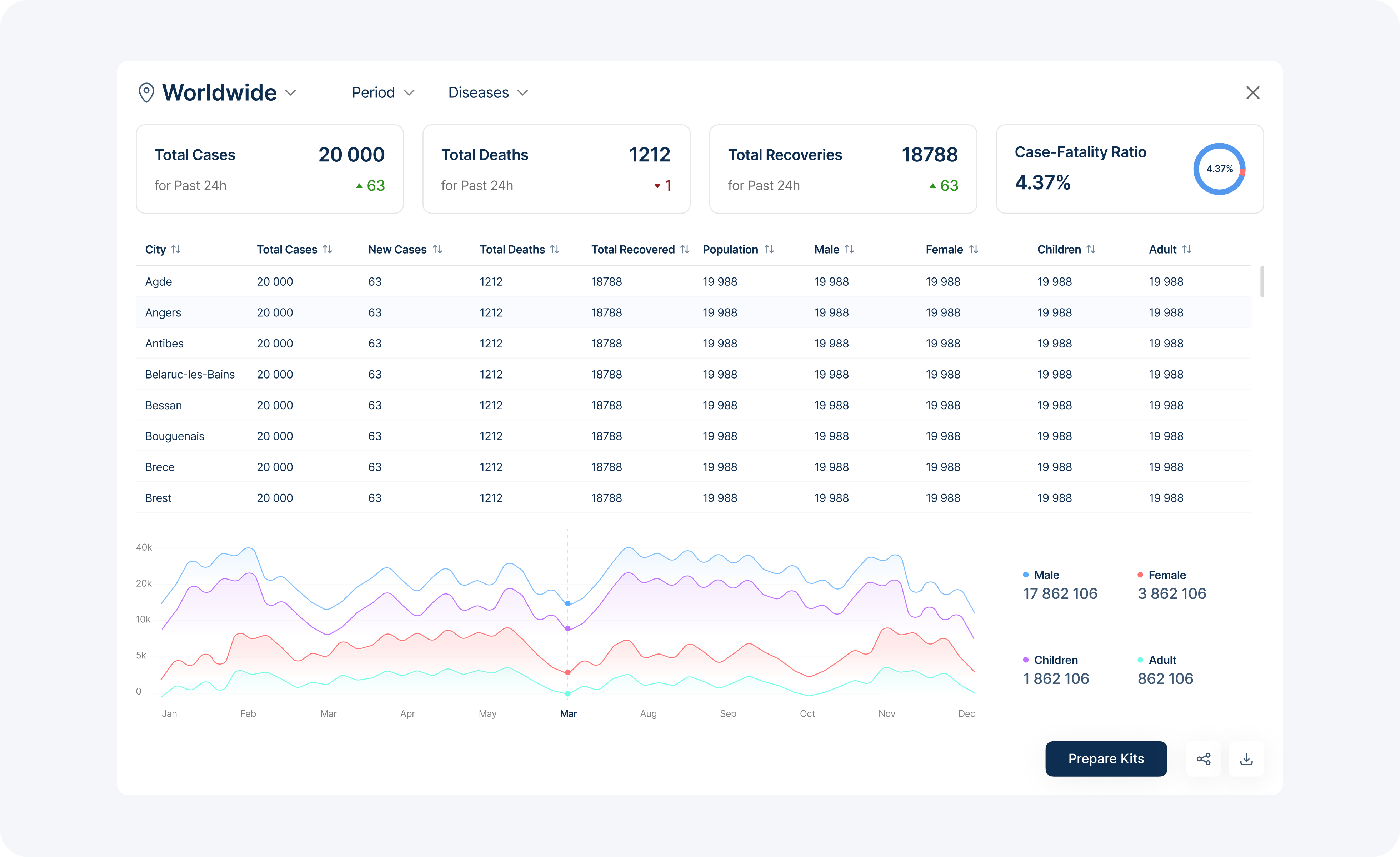
One of the core challenges was making large-scale, highly complex pathogen data usable, trustworthy, and actionable for different audiences—from scientists and healthcare professionals to humanitarian organizations.
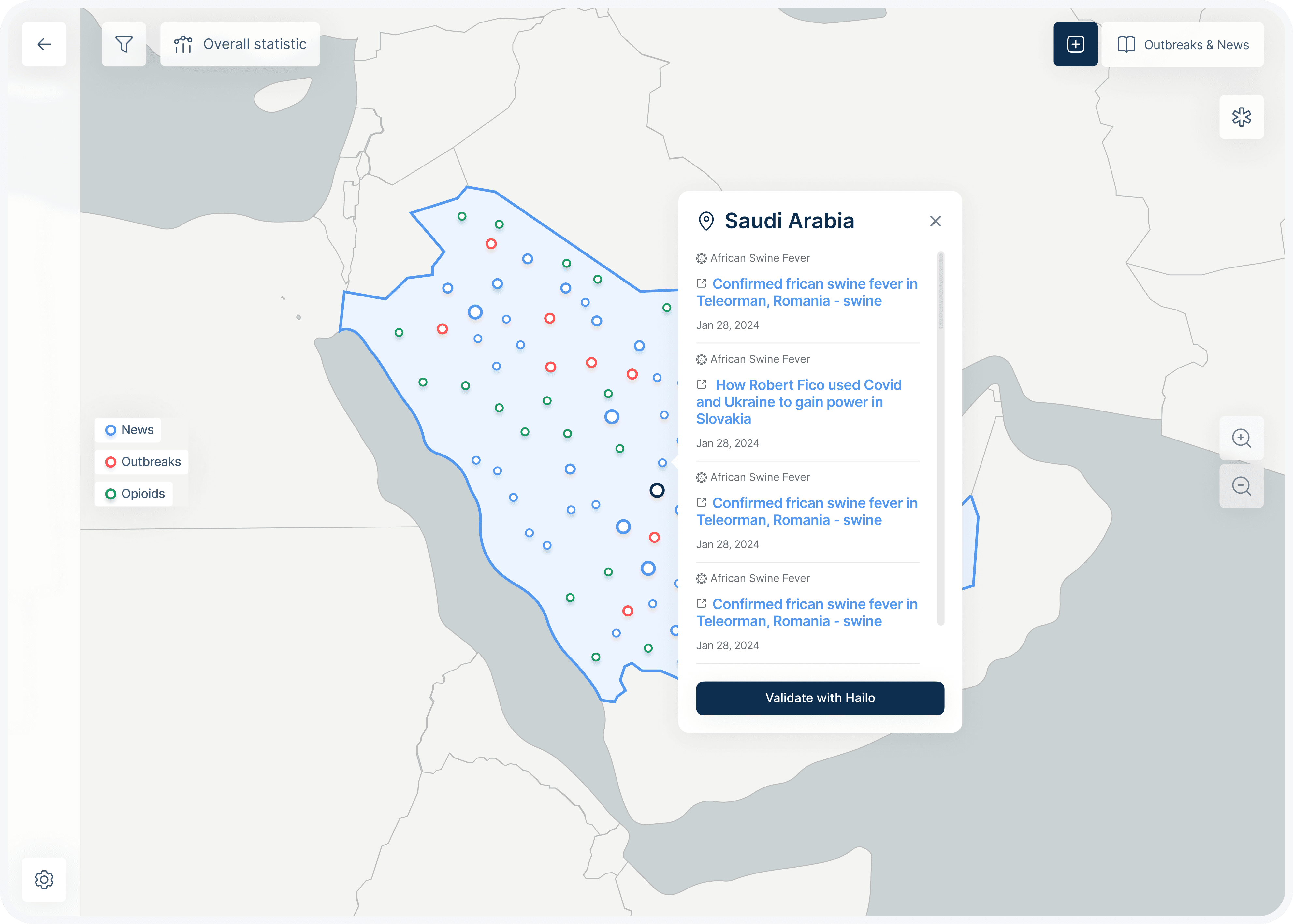
Prepaire Shield addressed this by transforming fragmented global datasets into a single interactive mapping platform that visualized pathogen spread, mutations, and trends in a clear and explorable way. Advanced filtering, time-based views, and interactive visual layers allowed users to analyze data without losing scientific depth.
Another key problem was enabling reliable data ingestion from multiple sources. The platform supported both real-time API integrations and structured manual uploads, ensuring data quality while allowing contributions from hospitals, research institutions, and global health bodies.
Finally, the product bridged scientific insight with real-world impact by connecting data visualization to humanitarian response and drug discovery workflows, enabling faster decision-making, coordinated action, and long-term scalability within the Prepaire Labs ecosystem.
One of the core challenges was making large-scale, highly complex pathogen data usable, trustworthy, and actionable for different audiences—from scientists and healthcare professionals to humanitarian organizations.
Prepaire Shield addressed this by transforming fragmented global datasets into a single interactive mapping platform that visualized pathogen spread, mutations, and trends in a clear and explorable way. Advanced filtering, time-based views, and interactive visual layers allowed users to analyze data without losing scientific depth.
Another key problem was enabling reliable data ingestion from multiple sources. The platform supported both real-time API integrations and structured manual uploads, ensuring data quality while allowing contributions from hospitals, research institutions, and global health bodies.
Finally, the product bridged scientific insight with real-world impact by connecting data visualization to humanitarian response and drug discovery workflows, enabling faster decision-making, coordinated action, and long-term scalability within the Prepaire Labs ecosystem.
Application (Peptomatics)
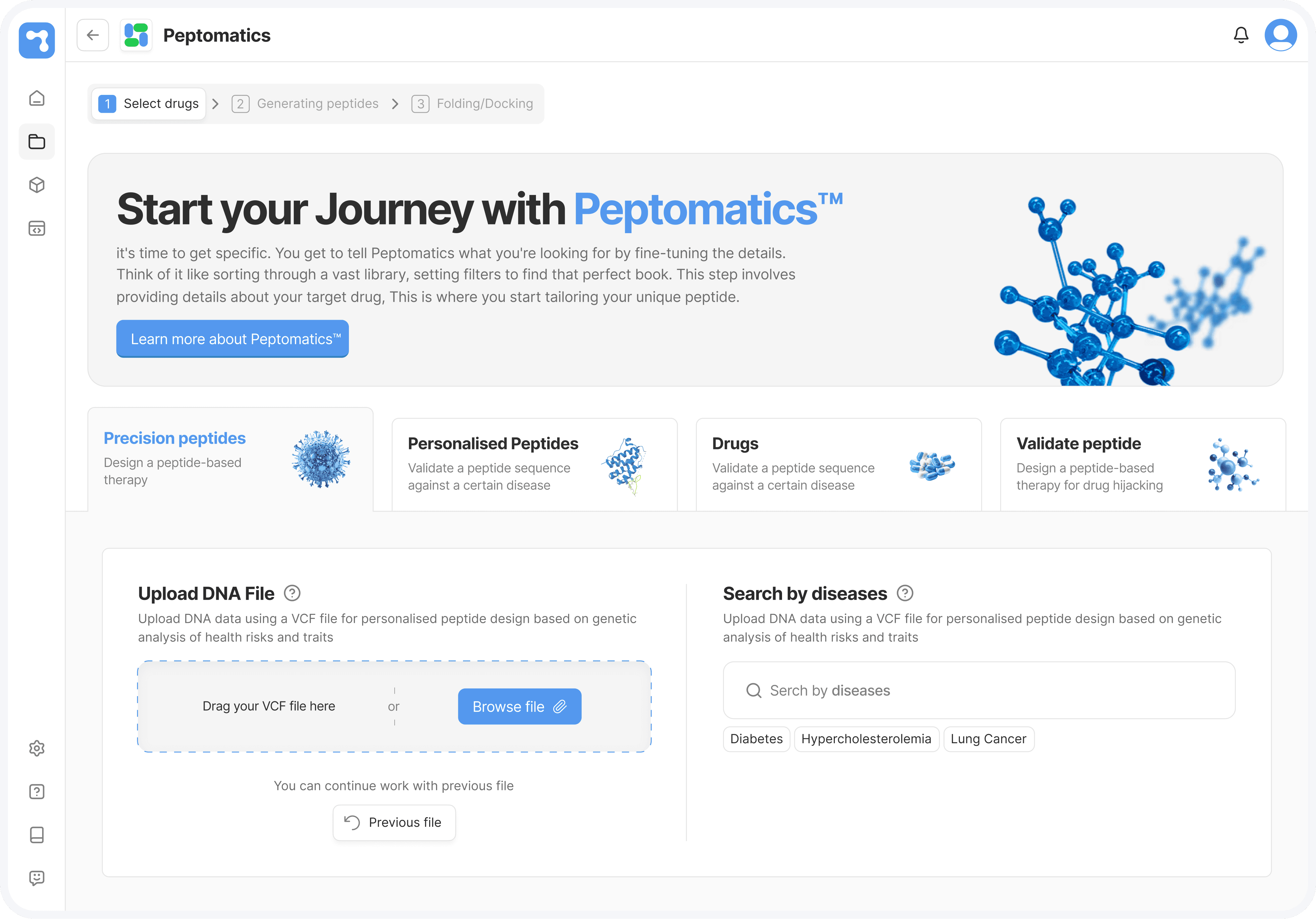
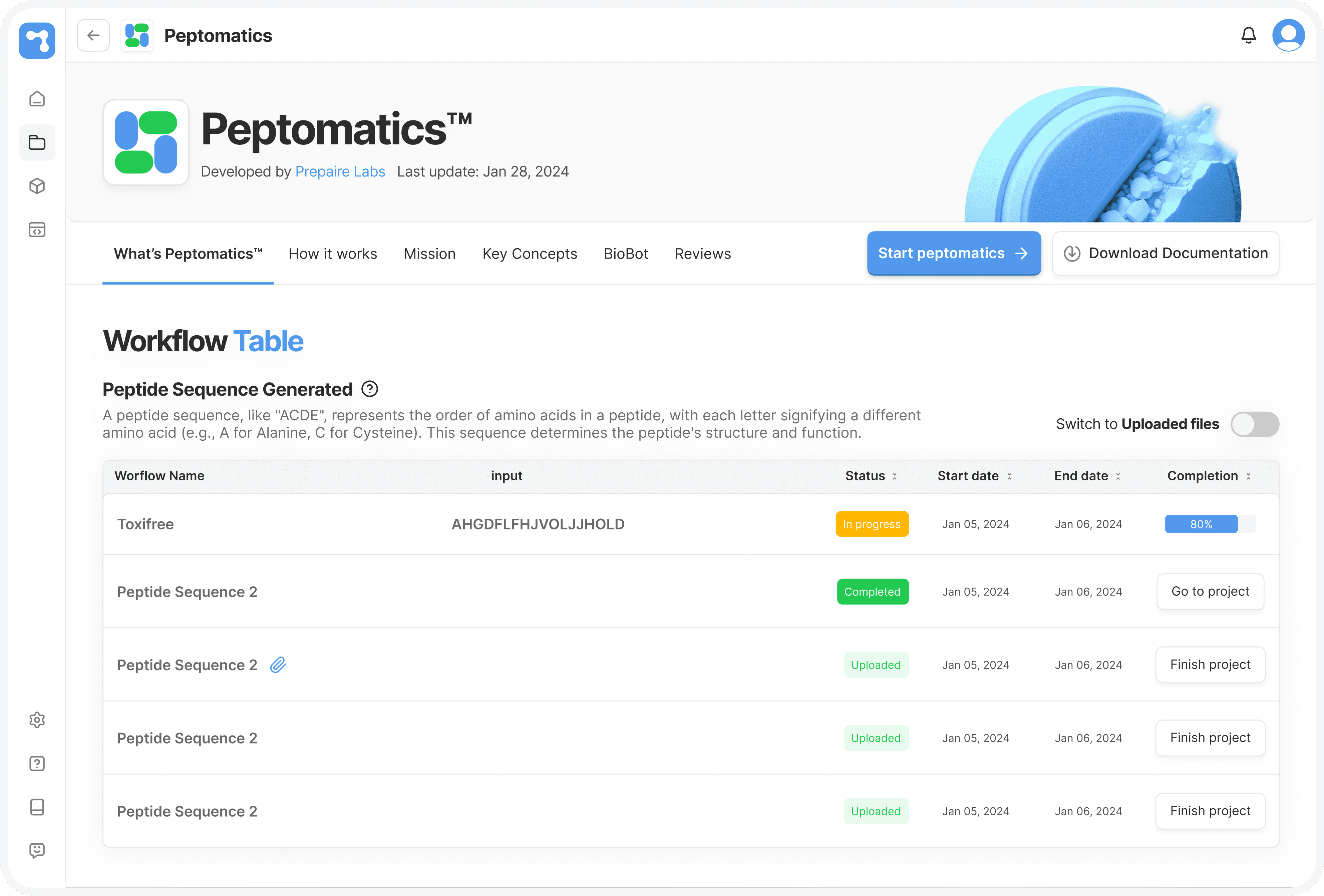
Peptomatics addressed the challenge of making highly complex peptide design and drug-binding research accessible within a single, coherent workflow.
One of the main obstacles was aligning differing perspectives among key stakeholders around the product’s purpose, scope, and level of scientific depth. Through iterative exploration and validation, we converged on a clear structure that balanced advanced computational capabilities with an intuitive user experience.
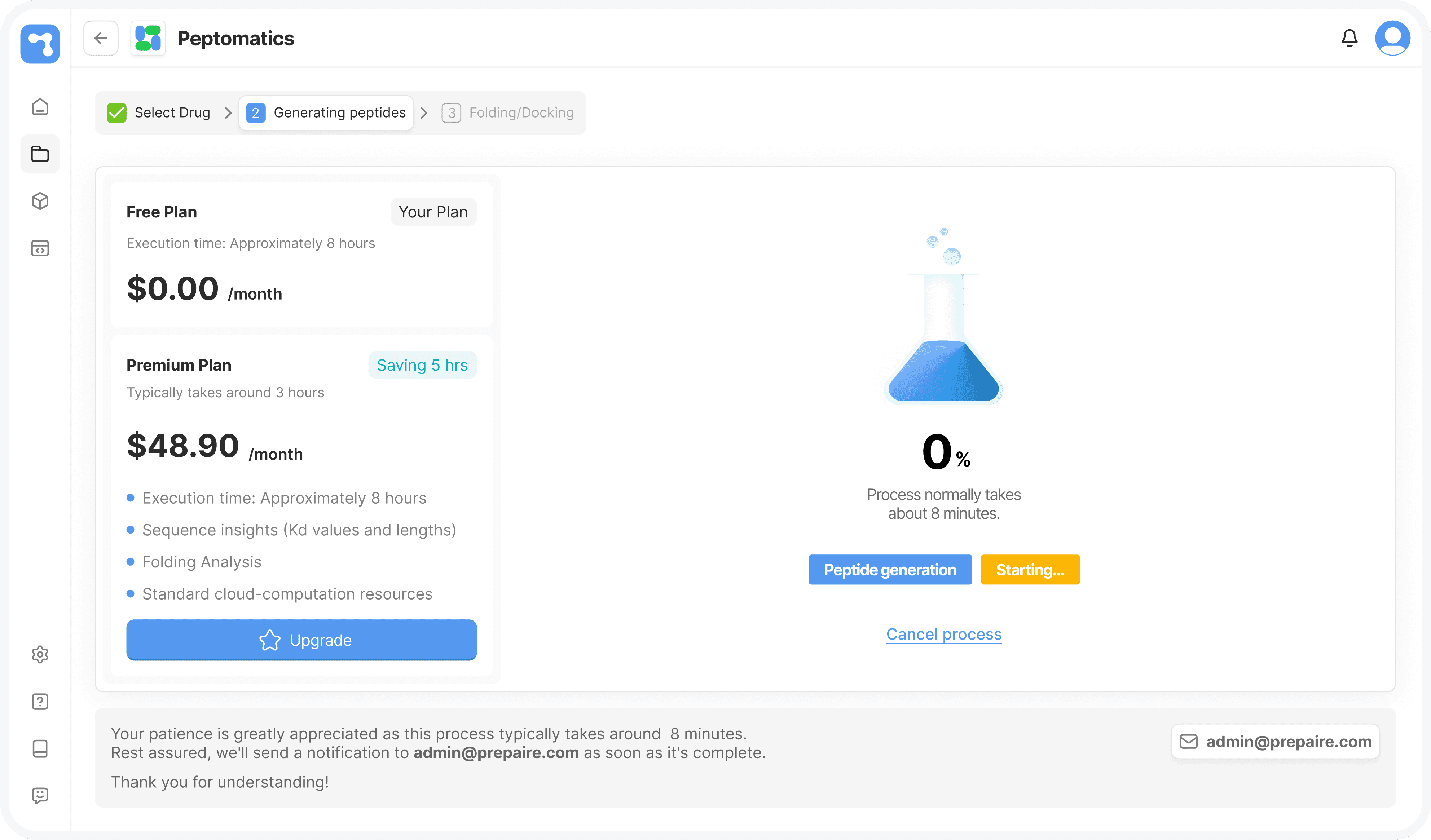
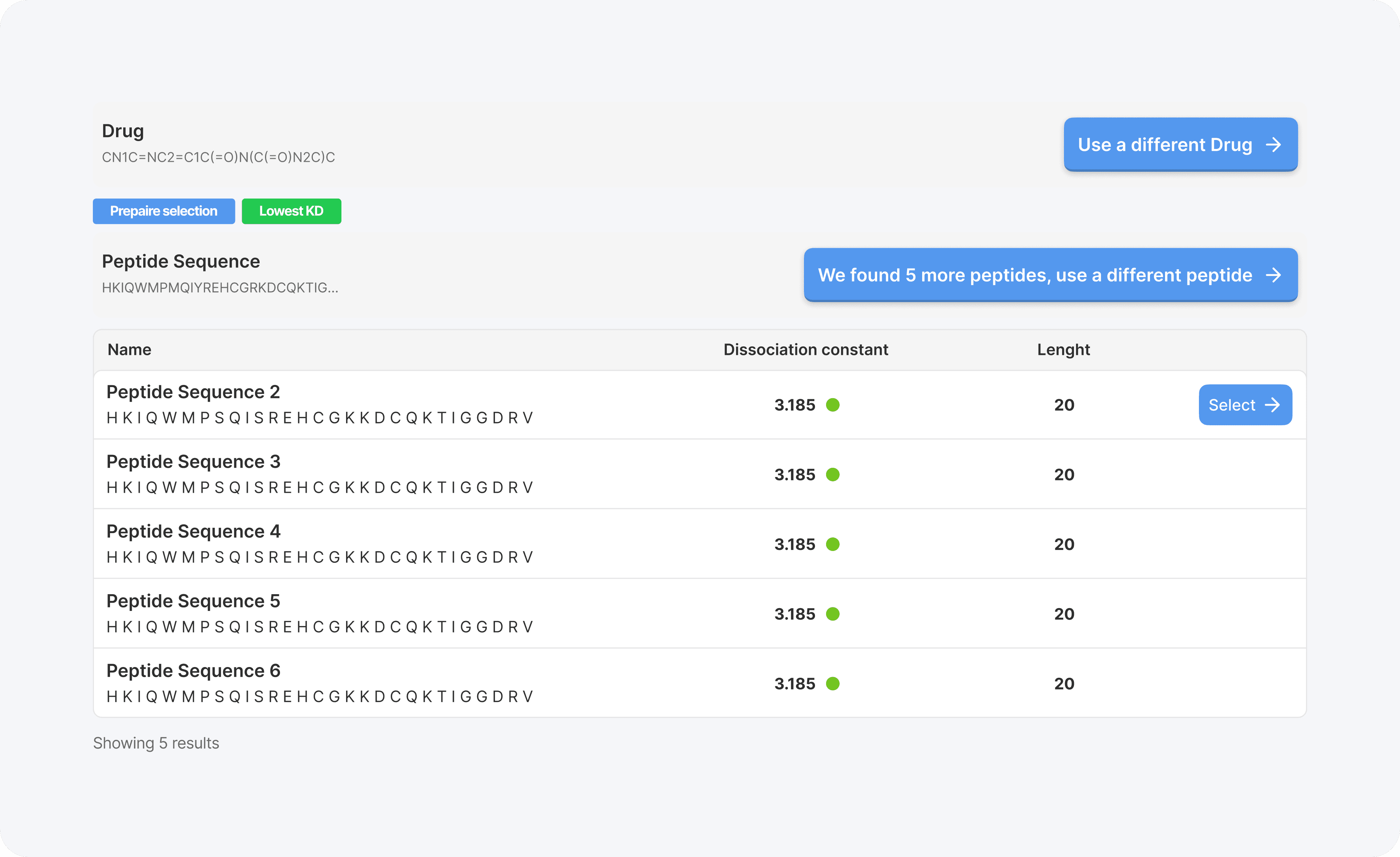
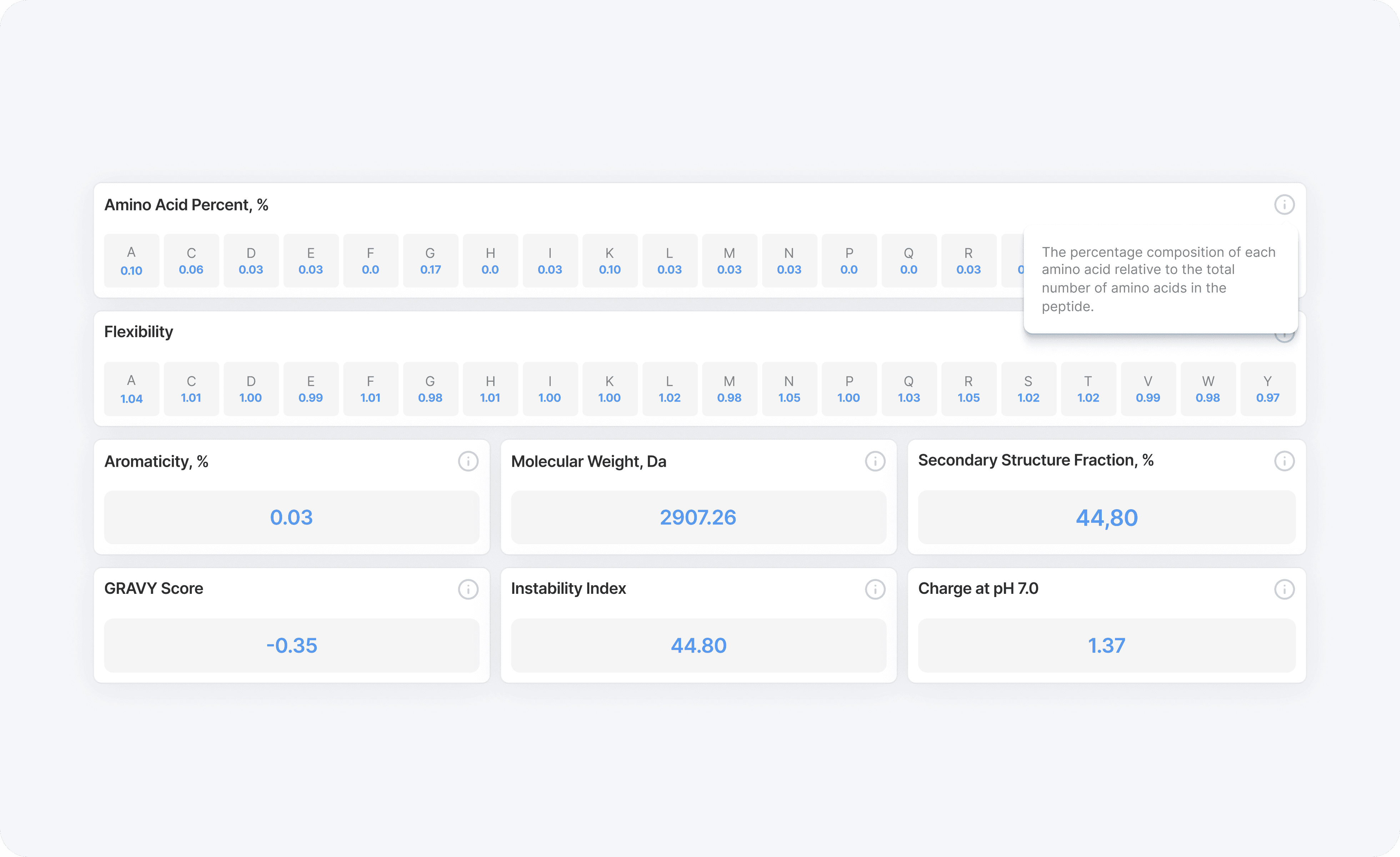
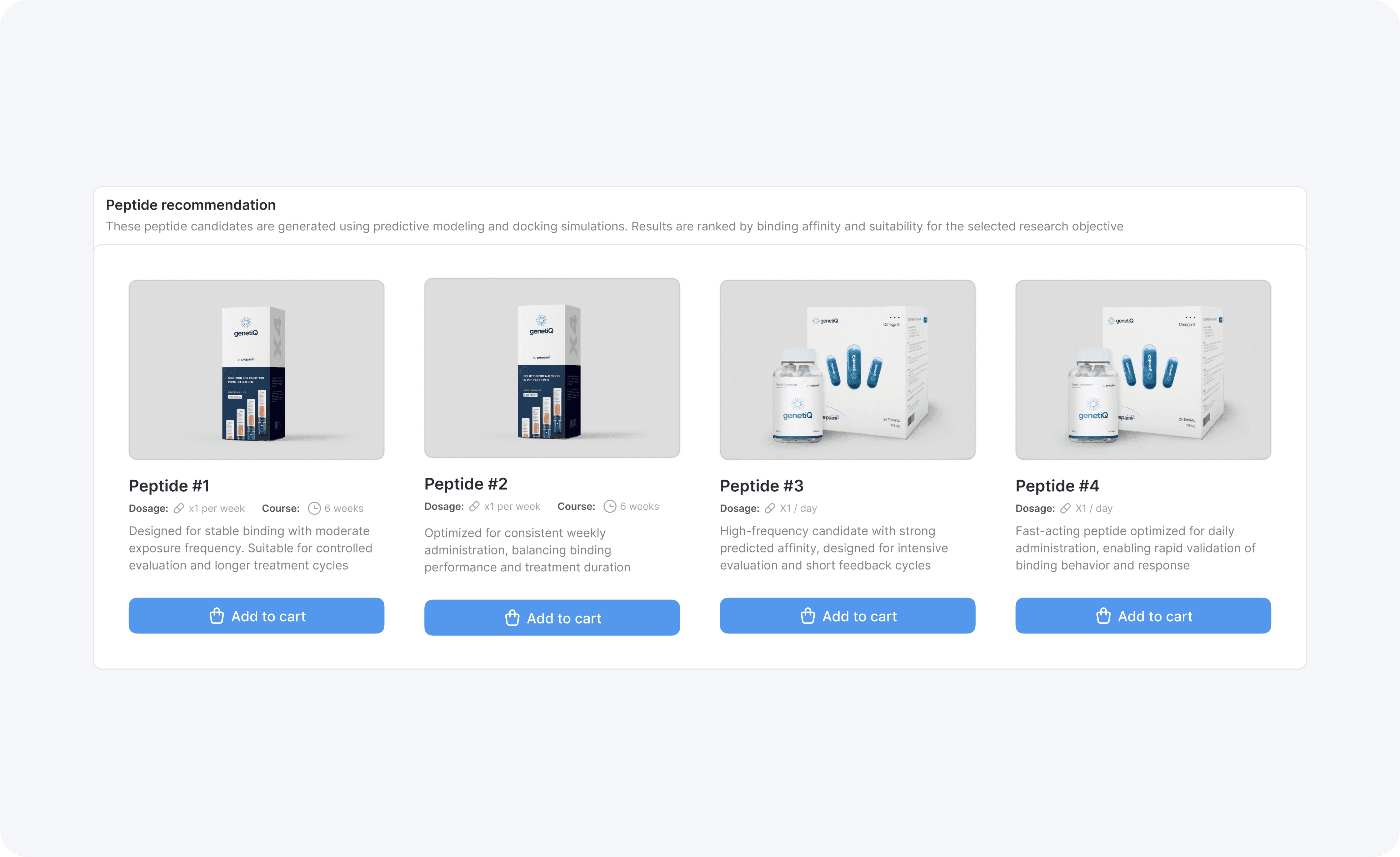
The final solution consolidated the product into four core flows: Precision Peptides, Personalised Peptides, Drugs, and Validate Peptide each supporting a distinct research goal while sharing a consistent interaction model. This structure allowed scientists to move from model selection and parameter customization to peptide generation, folding, docking, and affinity analysis without breaking context.
By simplifying navigation, clarifying terminology, and unifying complex tools such as AlphaFold, ESM Fold, and DiffDock into focused flows, the product enabled faster experimentation and more confident decision-making in peptide-based drug research.
Peptomatics addressed the challenge of making highly complex peptide design and drug-binding research accessible within a single, coherent workflow.
One of the main obstacles was aligning differing perspectives among key stakeholders around the product’s purpose, scope, and level of scientific depth. Through iterative exploration and validation, we converged on a clear structure that balanced advanced computational capabilities with an intuitive user experience.
The final solution consolidated the product into four core flows: Precision Peptides, Personalised Peptides, Drugs, and Validate Peptide each supporting a distinct research goal while sharing a consistent interaction model. This structure allowed scientists to move from model selection and parameter customization to peptide generation, folding, docking, and affinity analysis without breaking context.
By simplifying navigation, clarifying terminology, and unifying complex tools such as AlphaFold, ESM Fold, and DiffDock into focused flows, the product enabled faster experimentation and more confident decision-making in peptide-based drug research.
Application (HailoBAG)
One of the key challenges on the organizer side was defining a fair and scalable way to account for usage as events grew.
To address this, we designed a point-based system where the first 50 attendees of any event could be invited for free. As organizers added additional participants beyond this threshold, points were gradually deducted based on usage.
This approach lowered the barrier to entry for new organizers, encouraged early adoption, and provided a transparent, scalable model that aligned product usage with business value.
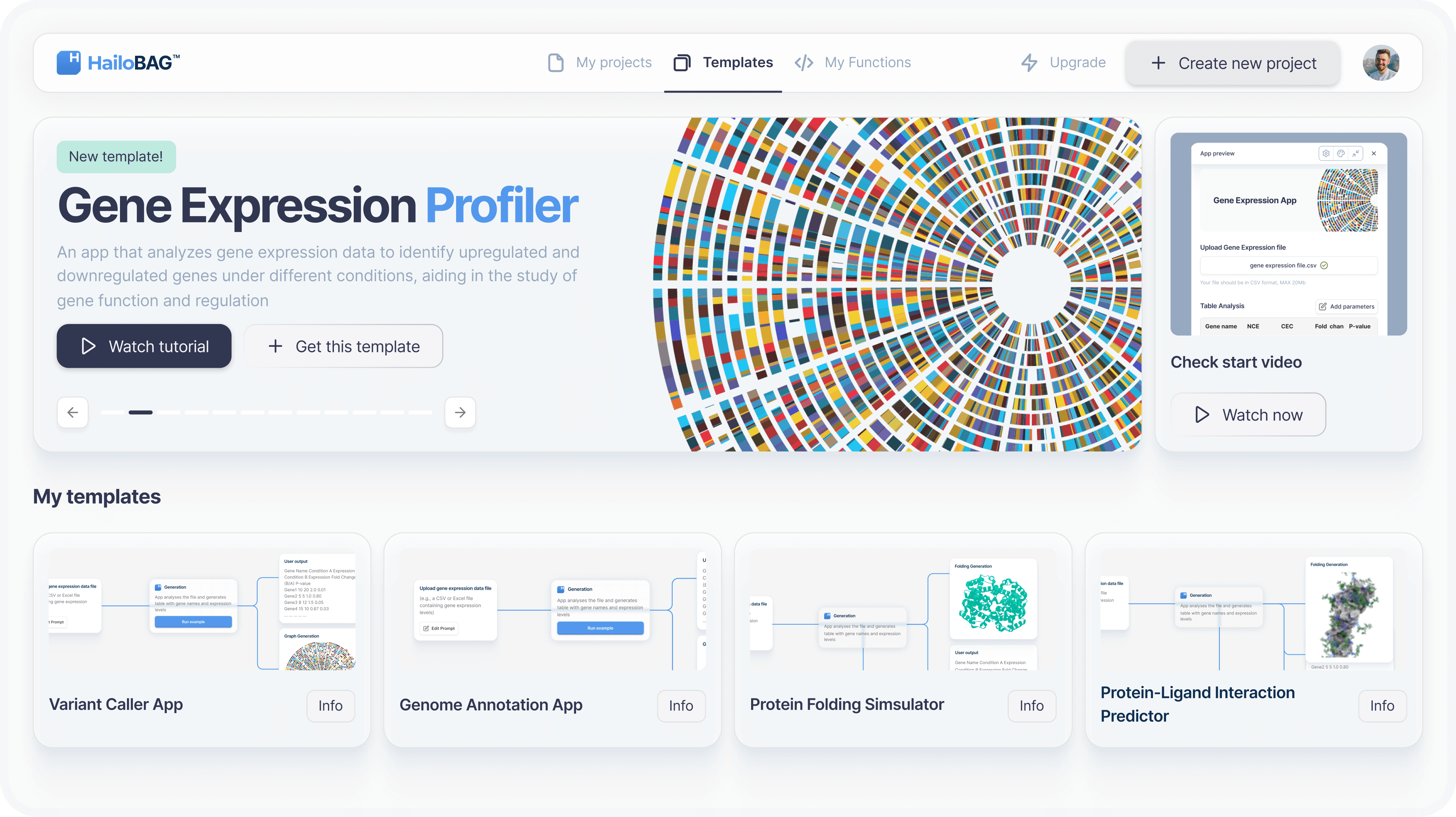
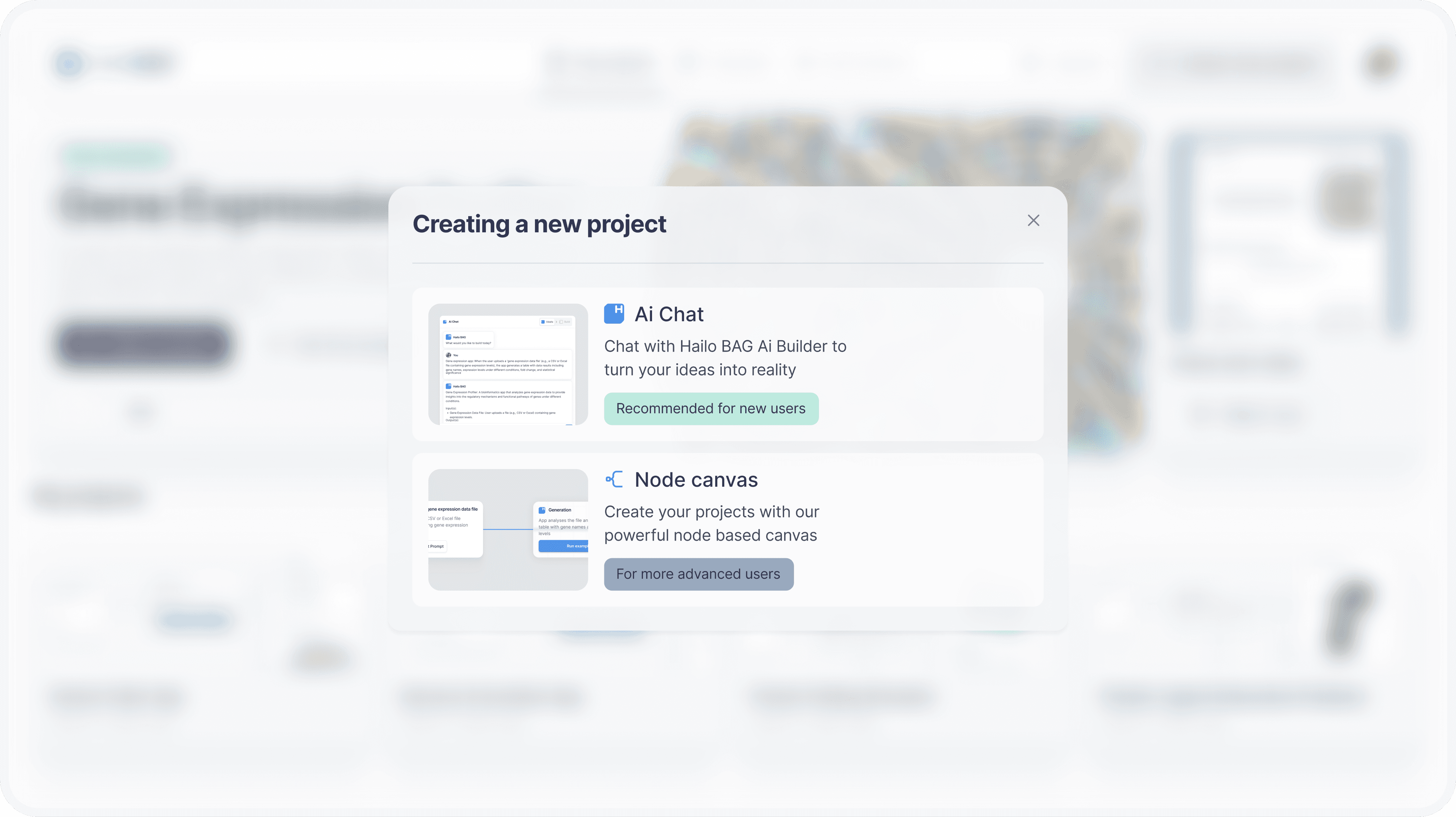
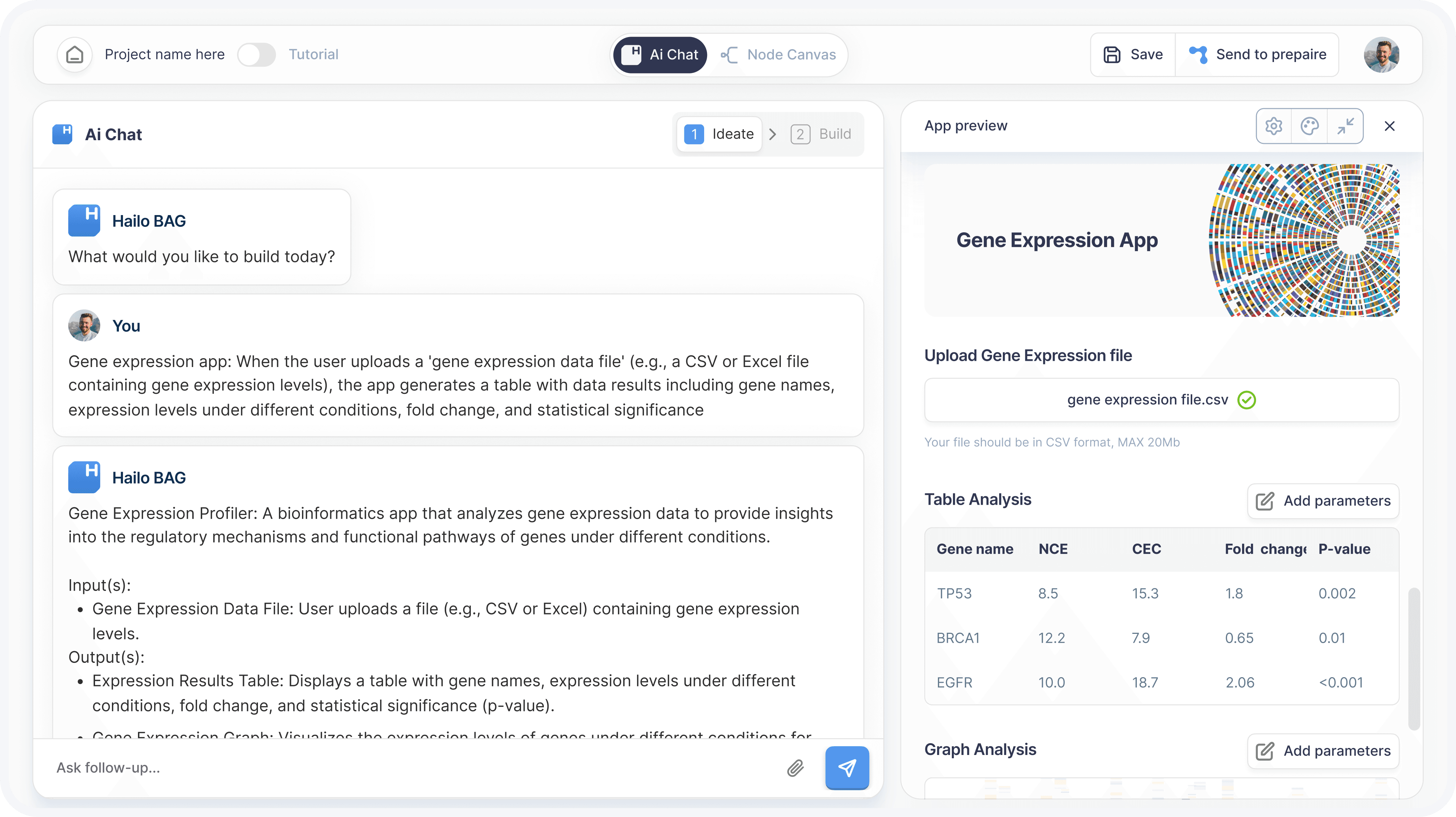
HailoBAG explored the idea of building a meta-application designed to enable the creation of other applications within a single framework.
The primary challenge was validating whether this approach provided enough real value compared to the complexity it introduced. Through early design exploration, prototyping, and internal evaluation, it became clear that the concept added cognitive and technical overhead without delivering proportional benefits to end users or the business.
By identifying these limitations early, the team avoided further investment in a solution that lacked a clear product–market fit. This process helped clarify priorities, refine strategic direction, and reinforced the importance of focused, outcome-driven product development over overly generic platforms.
One of the key challenges on the organizer side was defining a fair and scalable way to account for usage as events grew.
To address this, we designed a point-based system where the first 50 attendees of any event could be invited for free. As organizers added additional participants beyond this threshold, points were gradually deducted based on usage.
This approach lowered the barrier to entry for new organizers, encouraged early adoption, and provided a transparent, scalable model that aligned product usage with business value.
Platform
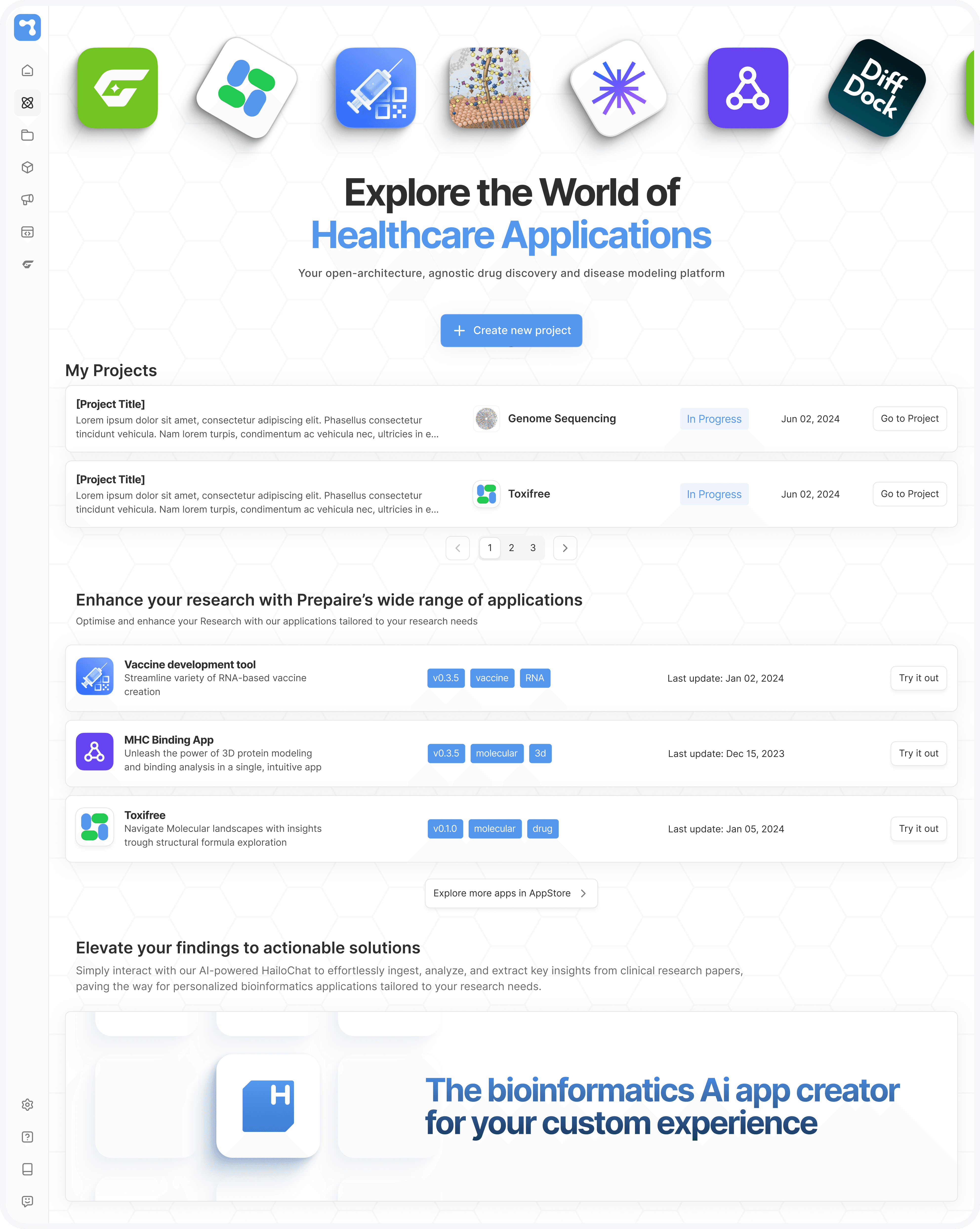
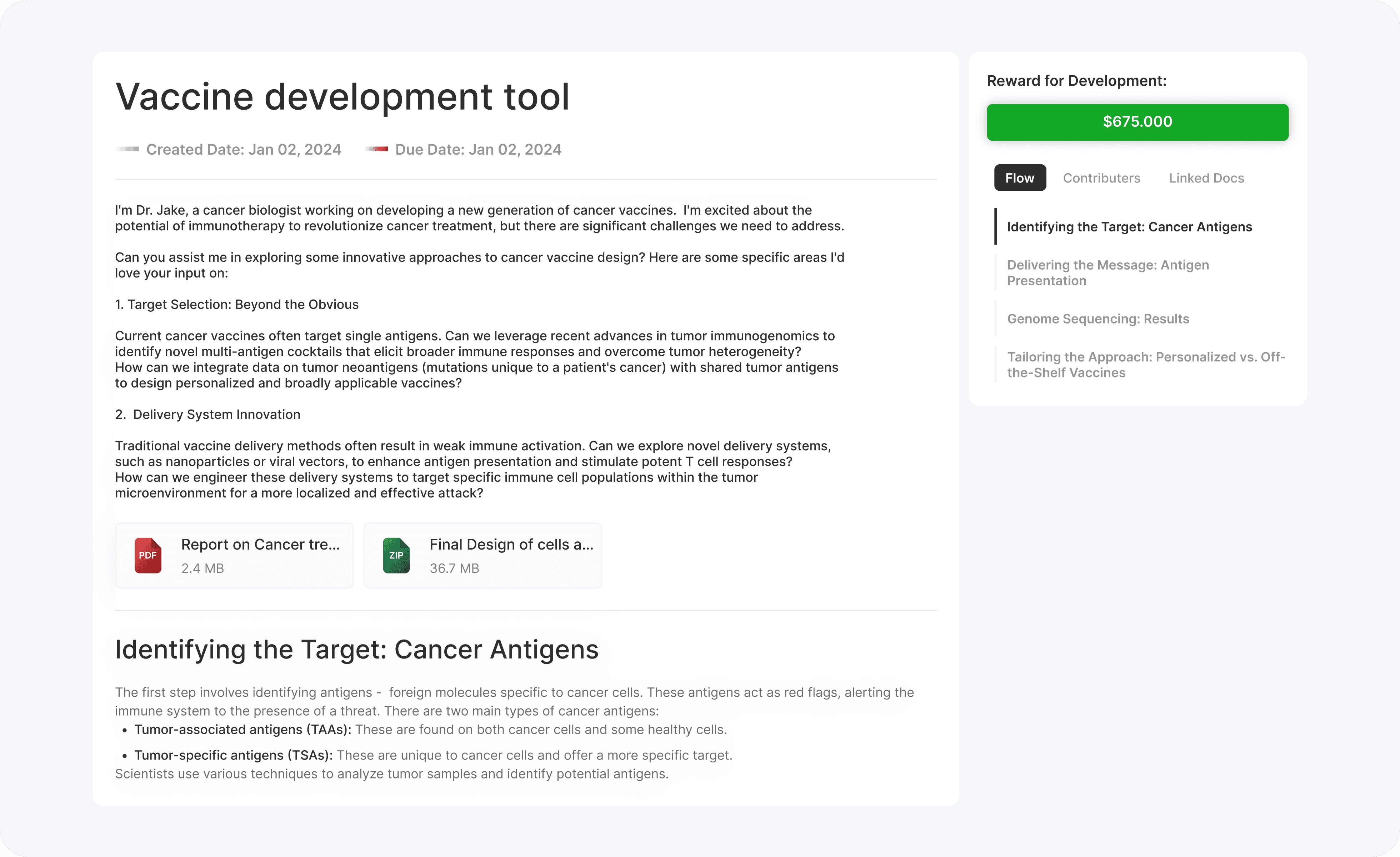
Beyond individual applications, a key challenge was evolving the core Prepaire platform to support a growing ecosystem of tools, contributors, and scientific workflows.
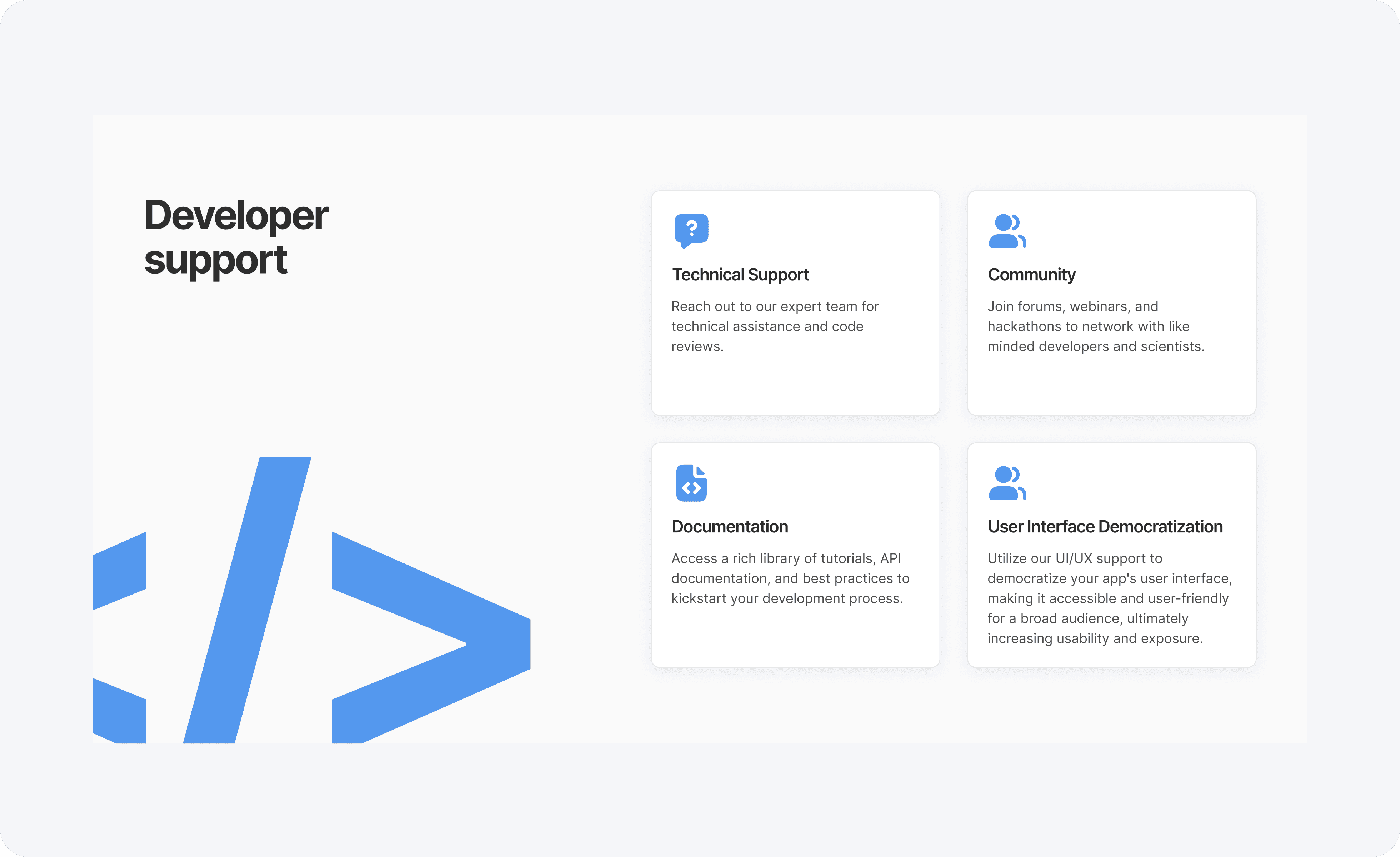
One of the strategic goals was to attract strong external developers from the biotech community by enabling them to build applications on the platform, participate in technical competitions, and potentially transition into full-time roles with meaningful impact and competitive compensation. This required a platform that was approachable to new contributors while remaining robust enough for advanced scientific use cases.
To support this, we consistently evolved the platform using a unified design system established early in the product, ensuring visual and interaction consistency across internal tools and third-party applications.
At the same time, the rapid breakthroughs in biotech particularly around AlphaFold and AI-driven modeling introduced new expectations. The platform addressed this by integrating AI-assisted tools that helped users explore, prototype, and shape personalized scientific solutions, reducing barriers between complex research ideas and practical experimentation.
Beyond individual applications, a key challenge was evolving the core Prepaire platform to support a growing ecosystem of tools, contributors, and scientific workflows.
One of the strategic goals was to attract strong external developers from the biotech community by enabling them to build applications on the platform, participate in technical competitions, and potentially transition into full-time roles with meaningful impact and competitive compensation. This required a platform that was approachable to new contributors while remaining robust enough for advanced scientific use cases.
To support this, we consistently evolved the platform using a unified design system established early in the product, ensuring visual and interaction consistency across internal tools and third-party applications.
At the same time, the rapid breakthroughs in biotech particularly around AlphaFold and AI-driven modeling introduced new expectations. The platform addressed this by integrating AI-assisted tools that helped users explore, prototype, and shape personalized scientific solutions, reducing barriers between complex research ideas and practical experimentation.
Outcomes
The work on Prepaire Labs resulted in a cohesive platform foundation capable of supporting complex scientific workflows, multiple applications, and an evolving ecosystem of contributors.
Across the core platform and individual applications, early validation confirmed that highly technical concepts such as predictive modeling, peptide generation, folding, and docking could be translated into structured, navigable experiences without compromising scientific depth. Scientists and domain experts were able to complete key workflows more consistently, indicating improved clarity and reduced cognitive overhead.
The introduction of a shared design system and repeatable interaction patterns enabled faster iteration across applications while maintaining consistency at the platform level. This proved especially valuable as new tools were added to the Prepaire app store, allowing both internal teams and external contributors to build on a familiar foundation rather than starting from scratch.
Applications such as Prepaire Shield and Peptomatics demonstrated that complex datasets and computational processes could be surfaced in focused, goal-oriented flows. Interactive visualization, AI-assisted recommendations, and modular workflows supported faster exploration and more confident decision-making during early research phases.
From a platform perspective, the work established the groundwork for scalable growth. The app store model, combined with clear onboarding and developer-facing patterns, supported experimentation with external contributors and reinforced the platform’s long-term vision as an ecosystem rather than a single-purpose tool.
While the platform remains under active development, the outcomes of this phase validated the core product direction, reduced friction across scientific workflows, and positioned Prepaire Labs to evolve alongside rapid advancements in AI-driven biotechnology.
Overall, the project established a scalable, extensible foundation for Prepaire Labs—one capable of supporting advanced scientific discovery, rapid experimentation, and future platform expansion as the biotech landscape continues to evolve.
The work on Prepaire Labs resulted in a cohesive platform foundation capable of supporting complex scientific workflows, multiple applications, and an evolving ecosystem of contributors.
Across the core platform and individual applications, early validation confirmed that highly technical concepts such as predictive modeling, peptide generation, folding, and docking could be translated into structured, navigable experiences without compromising scientific depth. Scientists and domain experts were able to complete key workflows more consistently, indicating improved clarity and reduced cognitive overhead.
The introduction of a shared design system and repeatable interaction patterns enabled faster iteration across applications while maintaining consistency at the platform level. This proved especially valuable as new tools were added to the Prepaire app store, allowing both internal teams and external contributors to build on a familiar foundation rather than starting from scratch.
Applications such as Prepaire Shield and Peptomatics demonstrated that complex datasets and computational processes could be surfaced in focused, goal-oriented flows. Interactive visualization, AI-assisted recommendations, and modular workflows supported faster exploration and more confident decision-making during early research phases.
From a platform perspective, the work established the groundwork for scalable growth. The app store model, combined with clear onboarding and developer-facing patterns, supported experimentation with external contributors and reinforced the platform’s long-term vision as an ecosystem rather than a single-purpose tool.
While the platform remains under active development, the outcomes of this phase validated the core product direction, reduced friction across scientific workflows, and positioned Prepaire Labs to evolve alongside rapid advancements in AI-driven biotechnology.
Overall, the project established a scalable, extensible foundation for Prepaire Labs—one capable of supporting advanced scientific discovery, rapid experimentation, and future platform expansion as the biotech landscape continues to evolve.
Primary metrics
↑37%
Task completion rate (scientific workflows)
Early testing showed improved completion of core workflows such as model selection, parameter setup, and peptide validation, driven by clearer information architecture and guided flows
↑42%
Application adoption within the platform
Scientists and internal teams were able to onboard faster and actively use newly released applications within the Prepaire app store, validating the platform structure and shared design system
Secondary metrics
Time to first meaningful result
↓32%
Repeat usage across applications
↑26%
Developer onboarding efficiency
↑ 30–40%
Data sources
Internal usability testing, stakeholder and domain expert reviews, early application usage signals, developer walkthroughs